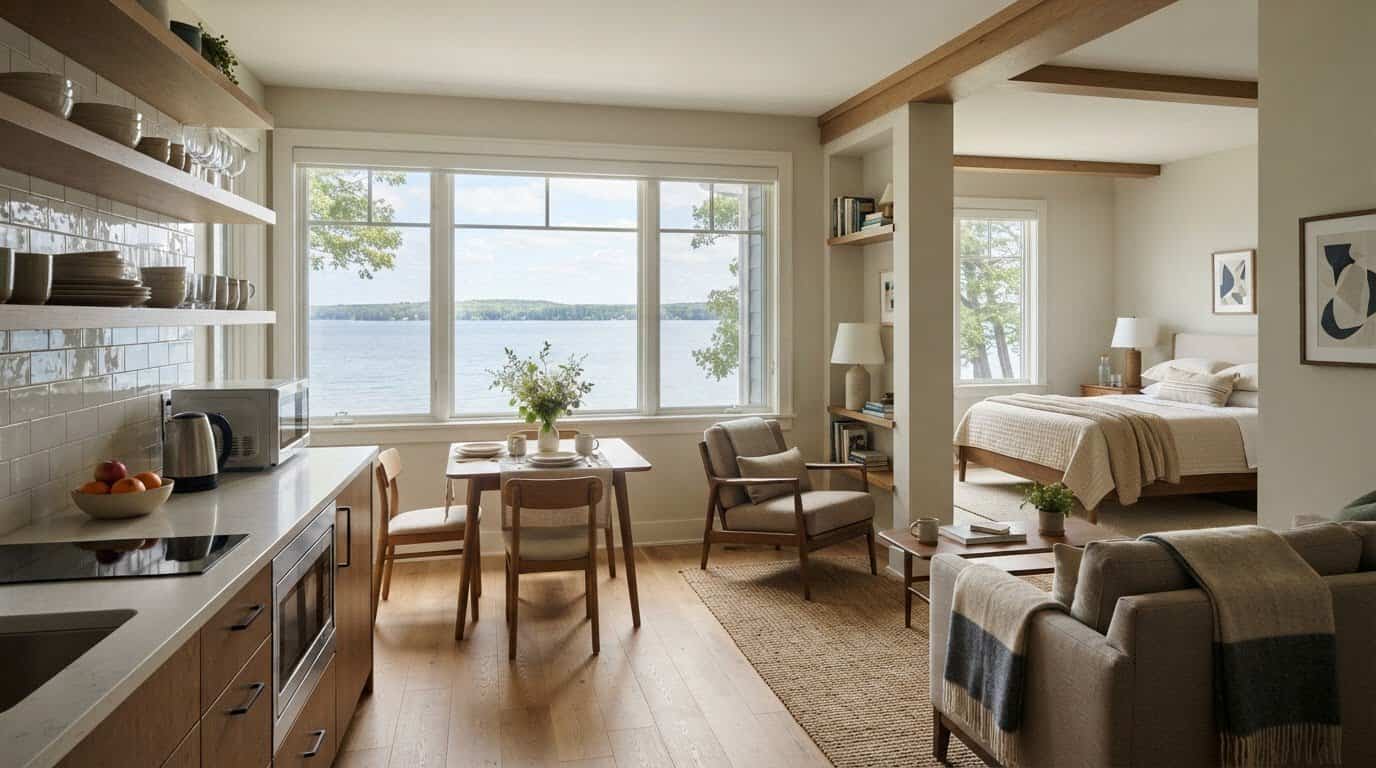

A suite kitchen can make a stay more convenient, but it may not match the space or equipment of a home kitchen. Whether a suite with a kitchen is worth it depends on how often you plan to prepare meals and what the setup allows. It can help reduce dining out and let you eat on your own schedule, especially when the suite has a stovetop and refrigerator.
It’s natural to want familiar meals while still enjoying a getaway. The key is understanding what “kitchen” means in a suite: some rooms have a compact kitchenette, while others offer more space and cooking equipment. Consider what you can prepare, how cooking fits your meal budget, and how the setup compares with a home kitchen before choosing a suite.
Key Takeaways
- Match the suite’s cooking setup to the meals you plan to make; a kitchenette and a full kitchen offer different levels of convenience.
- Cooking can reduce dining-out expenses and give you more control over meal timing and preferences.
- A suite kitchen is usually more compact and less equipped than a home kitchen, so expectations matter.
- Weigh any nightly room-price difference against your likely meal savings and how much you’ll actually cook.
What does a full kitchen in a hotel suite help you do?
A full kitchen lets you prepare more than snacks or reheated leftovers. A stove, oven, and larger refrigerator support meals such as baked pasta, roasted vegetables, or a cooked-to-order breakfast. That flexibility can be useful during a longer stay, when you want familiar food, flexible meal times, or space to store groceries. Suite kitchens vary, though, so the word “full” doesn’t guarantee the same equipment everywhere.
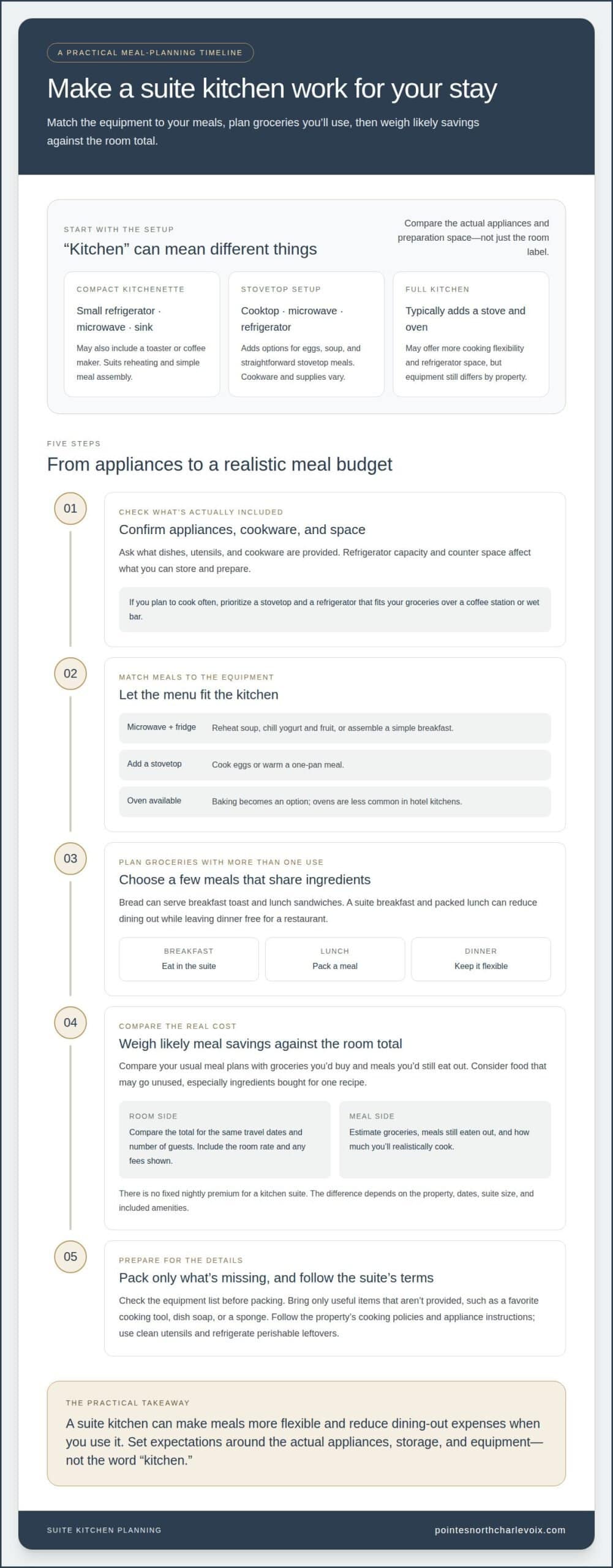
Extended-stay kitchens commonly include a cooktop, microwave, refrigerator, and basic cookware. Some also have a dishwasher, pans, plates, and flatware. Refrigerator capacity can range from compact to full size, and many suite kitchens have a stovetop and microwave rather than an oven. If you plan to cook often, prioritize a stovetop and a refrigerator that fits your groceries over a coffee station or wet bar.
Cookware and utensils can make the difference between a usable kitchen and a counter with appliances. Suites with kitchen facilities may provide basic cookware, such as pots and pans, but supplies vary. Before booking, ask what appliances, dishes, and utensils are included. Pack any essentials you’ll need that aren’t provided, such as a favorite cooking tool, dish soap, or a sponge.
Compared with a vacation rental, a hotel suite combines sleeping space with a kitchen that may be more compact. Both types of accommodation vary, so compare the actual appliances and preparation space rather than relying on the word “kitchen.” A kitchenette may have a small refrigerator, microwave, and sink, perhaps with a toaster or coffee maker. A full kitchen typically adds a stove and oven. For travelers seeking expansive culinary spaces and high-end amenities on a larger getaway, platforms such as luxurybookings.ae feature luxury villas and suites equipped with full chef-grade kitchens.
To compare suite prices and fees, look at the total for the same travel dates and number of guests. Include the room rate and any fees shown in the booking details, then weigh the total against the kitchen equipment you’ll use. A lower room rate may not suit meal plans that require an oven or a larger refrigerator.
Don’t assume utilities or housekeeping are charged separately. Check the booking’s stated total and itemized terms to see whether either appears as an additional charge. Compare any housekeeping terms with the room total before choosing a suite.
Potential savings from cooking during a stay
Cooking can reduce meal spending when it replaces meals you’d otherwise buy at restaurants. The value depends on what you prepare, how often you cook, and whether you use the groceries you buy. For example, making breakfast in the suite and packing lunch can cut dining out while leaving dinner free for a restaurant.
An extended-stay suite with a stovetop, microwave, and refrigerator can support everyday meals. Cook eggs on the stovetop, heat soup in the microwave, or keep yogurt and fruit chilled for breakfast. Plan ingredients that work across meals, such as bread for breakfast toast and lunch sandwiches, so groceries serve more than one purpose.
Are hotel kitchenettes equipped for full meals? Some can handle straightforward meals, but a compact kitchenette may not suit recipes that need an oven, several burners, or extensive prep space. Match your menu to the available appliances. A microwave-and-refrigerator setup may work for reheating and assembling meals, while a stovetop gives you more options.
To estimate savings, compare your usual meal plans with the groceries you’d buy and the meals you’d still eat out. Account for food that may go unused, especially ingredients bought for only one recipe. A few planned meals can make sense, while stocking a pantry for a short visit may not.
Bring only tools that support your menu and aren’t provided. A can opener, cooking spoon, or food-storage containers can help with canned soup, stovetop meals, and leftovers. Check the suite’s equipment list before packing so you don’t carry kitchen items you won’t use.
Hotel-suite cooking follows the property’s stated policies and the appliance instructions. For food safety, use clean utensils and refrigerate perishable leftovers. Explore the available suite amenities to see which comforts may fit your stay.
Differences between a suite kitchen and a home kitchen
A suite kitchen is designed for short-term convenience, while a home kitchen supports regular cooking and storage. A suite may have a kitchenette with a small refrigerator, microwave, and sink. Some also have a coffee maker or toaster. A full kitchen typically adds a stove, oven, and larger refrigerator, but hotel layouts and equipment vary.
That difference affects what you can prepare. A microwave and small refrigerator work for reheating soup, keeping drinks cold, or assembling a simple breakfast. Add a stovetop, and you can cook eggs or warm a one-pan meal. An oven offers more options, such as baking, but it is less common in hotel kitchens. At home, you’re more likely to have the space and appliances for recipes that need several steps.
Storage also affects how you shop. A suite refrigerator may fit breakfast ingredients and leftovers, but not a full grocery haul. Choose foods that suit your meals, such as fruit, yogurt, and sandwich supplies, instead of buying ingredients for a large recipe. Limited counter space can also make chopping vegetables or preparing multiple dishes less comfortable than at home.
Kitchen tools and cleanup may be simpler, too. Suite kitchens can include basic cookware, plates, and flatware, but the selection varies. A home kitchen usually has familiar tools within reach, from measuring cups to a favorite pan. In a suite, plan around the utensils and appliances provided, and bring a useful personal item if it suits your meals.
Think of a suite kitchen as a practical travel setup, not a home kitchen transplanted into your room. It can handle coffee, breakfast, reheating, and straightforward stovetop cooking. For meals involving several burners, baking, and extensive prep, the available equipment and counter space matter more. Set expectations based on the actual layout, not the word “kitchen.”
How much more does a hotel suite with a kitchen cost per night?
There isn’t one fixed nightly premium for a hotel suite with a kitchen. The difference depends on the property, travel dates, suite size, and included amenities. A compact kitchenette and a larger suite with extra living space are different room types, so comparing their rates alone may not isolate the kitchen’s value.
The price depends on the dates, suite type, length of stay, and included amenities, and is given after a quote request. A useful comparison starts with the total stay cost, not just one night’s rate. Compare rooms for the same dates and guest count, then account for any listed fees and the features each room includes.
Next, estimate how much you’d actually use the kitchen. If you expect to prepare breakfast and several simple meals, compare grocery spending with the cost of meals you’d otherwise buy. Cooking can reduce dining-out expenses, but the value depends on your meal choices and how much food you use. A kitchen may add little practical value if you mostly plan to dine out.
For example, a traveler planning coffee, breakfast, and reheated leftovers may need only basic cooking facilities. Someone preparing several stovetop meals may value a better-equipped suite. Consider the refrigerator, cooktop, cookware, and preparation space alongside the nightly rate. The room’s layout matters as much as the kitchen label.
For a short getaway, convenience may matter more than meal savings. On a longer stay, preparing breakfasts or lunches in the suite can make the added room cost more worthwhile. Compare your likely meal routine with the full stay total, and decide whether the kitchen’s specific appliances support that routine.
Review the suite accommodation options to compare layouts and choose a stay that suits your plans.
Pointes North Inn: King Suite with Kitchenette
Pointes North Inn’s King Suite with Kitchenette offers a suite with kitchen convenience. It may suit a stay where a kitchenette matters more than a full home-style cooking setup. Choose based on the meals you plan to prepare and the space you want during your visit.
If your plans call for more room, Pointes North Inn also offers a One Bedroom Suite and a Two Bedroom Suite. Guests traveling with pets can consider the Pet Friendly Condominium. Each option suits a different kind of stay, so match the accommodation to your priorities rather than assuming every suite has the same layout or kitchen features.
For a kitchen-focused stay, explore the King Suite with Kitchenette as part of your decision. Contact Pointes North Inn to discuss which suite may suit your plans.
Plan a Stay That Fits Your Rhythm
Let the shape of your trip guide your choice. A quiet morning, a flexible lunch, or time between outings can feel different when you have a private place to settle in. The useful question isn’t whether every meal should happen in your suite, but whether having that option supports the kind of break you want.
Before choosing, picture an ordinary day away: how you’ll start the morning, where you’ll pause, and whether you want room to slow down rather than follow a fixed dining schedule. That simple exercise can clarify whether a suite with a kitchen is worth it for this particular getaway.
Choose a stay that leaves space for both plans and spontaneity. If you’re ready to shape a relaxing getaway, contact Pointes North Inn and take the next step toward a refreshing break.
Frequently Asked Questions
Do Hotel Suites Have Pots and Pans?
Suites with kitchen facilities may provide basic cookware, including pots and pans, but supplies vary by property. A small kitchenette may have limited cooking tools, while a larger setup may include more utensils and dishes. If you plan a specific recipe, such as pasta that needs a pot and strainer, choose a simple backup meal in case the necessary tool isn’t available.
How much can a kitchen suite save on meals during a trip?
Savings depend on how many purchased meals you replace and how efficiently you use groceries. Estimate the cost of ingredients for meals you’ll actually prepare, then compare it with your usual dining plans. For example, a family that uses a suite kitchen for a few breakfasts may see a different value from travelers who cook most days. Avoid buying specialty ingredients for just one dish.
What amenities are typically included in a hotel suite kitchen?
Hotel kitchen equipment varies, but a cooking setup may include a cooktop, microwave, refrigerator, cookware, dishes, and flatware. Some kitchens also have a dishwasher. A kitchenette may offer a smaller refrigerator, sink, and microwave, with a coffee maker or toaster in some rooms. Treat these as possible features, not a guaranteed package, and plan meals around the equipment provided.
When is a hotel suite with a kitchen worth the extra cost?
A suite with a kitchen is worth the extra cost when the room rate is balanced by practical use. Consider the length of your stay, how many meals you’ll prepare, and whether the appliances suit your plans. A kitchen can be especially useful if you prefer familiar breakfasts or flexible meal times. If you expect to eat out for most of the trip, it may matter less.