The best time for a multigenerational family getaway depends on what everyone wants from the trip. Summer suits beach outings and boating, while fall may appeal to families who enjoy colorful foliage and fewer crowds.
It’s natural to start by finding dates everyone can make. But smooth planning also means considering family goals, different needs, shared responsibilities, and budgets before booking. Traveling just before or after school closes may help families save money, while choosing a season that matches the activities relatives enjoy can make the trip rewarding across generations. This guide will help you weigh when to visit, agree on what would make the trip memorable, coordinate dates and responsibilities, and discuss budgets in advance. With those decisions made together, you can plan a getaway with room for family time and well-earned relaxation.
Key Takeaways
- Choose a destination and season that fit your family’s interests, needs, and preferred pace.
- Talk together about what would make the trip memorable, and which activities everyone wants to share.
- Coordinate dates early and agree on who will handle the key planning responsibilities.
- Discuss budgets before making plans so everyone understands the shared costs and personal priorities.
1. Best time to visit Michigan for families
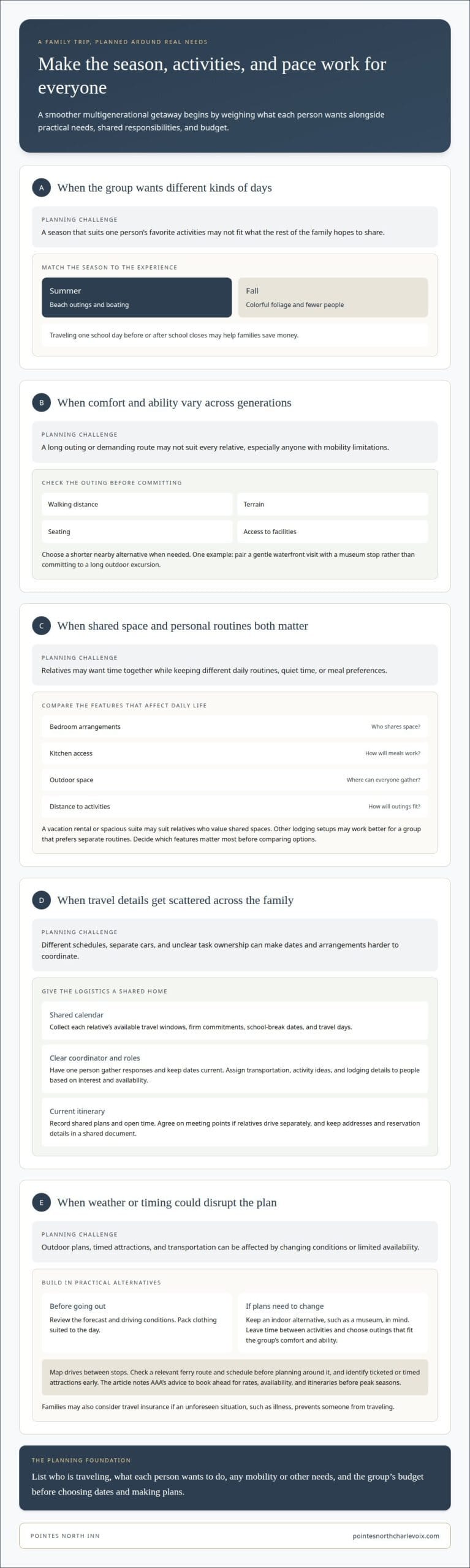
Choose the season around the activities your family hopes to share. Summer suits beach outings and boating, while fall brings colorful foliage and fewer people. Before selecting dates, list who is traveling, what each person wants to do, any mobility or other needs, and the group’s budget. Traveling one school day before or after school closes may help families save money.
For a multigenerational vacation, choose accommodations that fit your group’s routines as well as its plans. Compare bedroom arrangements, kitchen access, outdoor space, and distance to activities. A vacation rental or a spacious suite at a property like Pointes North Inn may suit relatives who value shared spaces, while other lodging setups may work better for a group that prefers separate routines. Decide which features matter most before comparing options.
For seniors or anyone with mobility limitations, assess each planned outing by walking distance, terrain, seating, and access to facilities. Consider whether the route and activity suit everyone joining, then choose a shorter nearby alternative. For example, pair a gentle waterfront visit with a museum stop, so relatives can take part without committing to a long outdoor excursion.
Plan transportation around the places on your itinerary. Map the drive between stops, agree on meeting points if relatives travel separately, and leave time between activities. If you are towing a boat or travel trailer along for your northern getaway, equipping your setup with specialized sway control from propridehitch.com can help ensure a smoother, safer highway drive. If a ferry is relevant to your destination, check its route and schedule before planning around it. Identify ticketed or timed attractions early, and consider AAA’s advice to book ahead for rates, availability, and itineraries before peak seasons.
Before outdoor plans, review the forecast and driving conditions, then pack clothing suited to the day. Keep an indoor alternative, such as a museum, in mind in case the weather changes. Kayaking, fishing, hiking, and beach outings can create shared memories when activities suit the group’s comfort and ability. Families may also consider travel insurance if an unforeseen situation, such as illness, prevents someone from traveling.
2. Agreeing on trip goals and expectations
Start with a family conversation about what would make the trip memorable. Grandparents may picture relaxed mornings, while parents may hope for active outings with children. Ask each generation to name a favorite experience, such as a beach day, scenic drive, or dinner together. Then agree on a shared priority to guide the plans. A milestone celebration might call for a special meal, while a reunion may center on unhurried time together.
Be specific about the pace. A day with a morning outing, a long lunch, and a quiet afternoon feels different from one built around activities. Ask who wants to join a hike and who would rather explore a nearby town. A group can enjoy outdoor experiences and local attractions without everyone doing everything together. Shared plans are easier when everyone knows which activities are optional.
Discuss what “family time” means to each person. Some relatives may value a group photo at a lighthouse; others may remember board games after dinner or a relaxed evening conversation. Gather these ideas before settling on the itinerary. It’s easier to balance everyone’s hopes when the group distinguishes must-do moments from nice-to-have plans. Leave room for spontaneous conversation, too.
Set expectations for accommodations and daily routines alongside activity goals. Talk through who needs quiet time, who rises early, and whether relatives want meals together or more flexibility. If a pet is part of the family, include that in the discussion before choosing lodging. A clear agreement prevents one person from assuming every outing is mandatory. Browse seasonal outdoor activity ideas to help spark the family’s own wish list.
3. Coordinating dates and responsibilities
Start date planning with a shared calendar showing each relative’s available travel windows. Ask grandparents, adults, and parents to mark firm commitments, then identify overlapping options for Northern Michigan. Include travel days, not just vacation dates, so arrival and departure plans work for families driving from different places. If school schedules shape the trip, compare dates around school breaks before settling on a week. Booking a large family trip early can give the group more choices and make it easier to keep arrangements together.
Choose a coordinator to gather responses and keep the latest dates in one place. This person can summarize which options work, note unanswered messages, and share the family’s decision. Assign responsibilities based on interest and availability: someone can organize transportation—such as arranging a camper or motorhome through troyersrvrental.com for relatives road-tripping from neighboring states—another can collect activity ideas, and another can track lodging details. Clear roles help prevent duplicate reservations or the assumption that someone else handled an important task.
Build a flexible itinerary once the dates are settled. Record shared plans, such as a beach outing or group meal, alongside open time for relatives who prefer a slower day. Leave room to rest between activities, especially when children and grandparents have different routines. If relatives drive separately, agree on meeting points and how the group will share updates. Keep essential details, including addresses and reservation information, in a shared document everyone can access.
Set a decision date for major arrangements, then give relatives enough time to respond before plans become difficult to coordinate. Note who is responsible for each booking and who needs the confirmation details. For lodging, compare the group’s needs with the available accommodation details before committing to dates. Keep a simple itinerary current as plans change, and send the latest version to the family. With dates, owners, and updates clearly organized, everyone can look forward to the trip without carrying the planning alone.
4. Discussing budgets in advance
Set a shared budget before anyone commits to lodging, meals, or activities. Ask each household to privately name a comfortable spending range, then discuss the overlap without pressure. This helps relatives separate shared expenses from personal choices, such as souvenirs or an extra kayaking outing. Include travel, accommodations, food, activities, and a small cushion for changes. A clear plan can help prevent awkward surprises later.
Lodging, dining, and activity costs in Northern Michigan vary by season, accommodation type, restaurant choice, and planned experiences. Rather than assume one total suits everyone, compare options for your dates and decide which costs the group will share. For example, relatives might split a group meal while each household covers its own breakfasts. Resort stays and vacation rentals can also involve different spending patterns, so compare what fits the group’s priorities.
Agree on a simple payment method before booking. One relative might pay for a shared reservation, while others send their agreed portions by a date the family chooses. Keep a written record of shared and individual expenses. For instance, mark a planned boat outing as a group expense, but leave personal shopping outside the shared total. Clear records help avoid confusion when several households contribute.
Build the budget around the memories your family values most. If a special dinner matters more than a packed itinerary, make room for that gathering and choose simpler meals another day. If outdoor adventure is the priority, decide which paid activity is worth sharing and keep other mornings open. Set aside individual spending money, too, so relatives can choose a treat without changing the group plan. Include accommodation options in your budget comparison.
Costs depend on the season and the group’s choices. Resort stays, vacation rentals, restaurant meals, and paid outings can all shape spending differently. Compare options for your dates and agree on which expenses to share.
Pointes North Inn
Pointes North Inn is a condominium-suite hotel in downtown Charlevoix, offering suite accommodations for families planning a Northern Michigan stay. Once your dates, group priorities, and budget are set, compare lodging options with your family’s needs. A One Bedroom Suite or Two Bedroom Suite may suit relatives seeking separate sleeping areas, while a King Suite with Kitchenette provides a kitchenette. Families traveling with a pet can consider the Pet Friendly Condominium.
Choosing a stay that fits your group can make it easier to enjoy shared outings and relaxed time together. Contact Pointes North Inn to discuss your family’s stay.
Make Room for a New Family Tradition
Give your Northern Michigan getaway a small tradition that belongs to your family. It could be a group photo at the start of each trip, a favorite dessert after dinner, or a shared note where everyone records a memorable moment. A simple ritual gives relatives of different ages something familiar to look forward to, while leaving each visit free to unfold in its own way.
As you continue planning a multigenerational trip to Northern Michigan, look beyond the itinerary and choose one detail that will make the gathering feel distinctly yours. It might be a toast to a family milestone or a quiet morning walk together. Keep the idea easy for everyone to enjoy, and let the memories grow naturally.
When you’re ready to take the next step toward your family’s stay, contact Pointes North Inn. Your Northern Michigan family getaway can begin with a thoughtful plan and plenty of room for togetherness.
Frequently Asked Questions
When is the best time to go to Michigan if you are traveling with a family?
Summer suits families who want beach outings and boating; fall appeals to those drawn to foliage and fewer crowds. Consider school calendars, preferred activities, and the pace your group enjoys. Families with flexible school schedules might compare dates just before or after school closes. The best timing is the season that fits your group’s shared priorities.
What are the best destinations in Northern Michigan for a multi-generational family trip?
Choose destinations where relatives can enjoy different experiences without following the same pace. Sleeping Bear Dunes National Lakeshore, Great Lakes beaches, scenic lighthouses, local museums, and state parks offer varied settings for family outings. You might pair a lakeshore visit with a museum stop, giving relatives an alternative to a longer outdoor day while keeping everyone connected to the same trip.
When is the best time of year to visit Northern Michigan with children and older adults?
Summer works well for families prioritizing beach time and boating, while fall offers colorful scenery and fewer crowds. When children and older adults travel together, choose dates around activities and daily routines that suit both age groups. Plan shorter shared outings with relaxed time afterward, so relatives can enjoy the destination together without keeping the same pace all day.
Which Northern Michigan beaches and attractions are accessible for seniors and people with mobility limitations?
Assess each outing’s walking distance, terrain, seating, and access to facilities. Pairing a gentle waterfront visit with a museum stop can offer a shorter alternative to a long outdoor excursion.
How do you get around Northern Michigan, including ferry options and travel times between destinations?
Map the drive between itinerary stops, agree on meeting points if relatives travel separately, and leave time between activities. If a ferry is relevant, check its route and schedule before planning around it.
What weather, driving, and outdoor safety risks should families prepare for in Northern Michigan?
Review the forecast and driving conditions before outdoor plans, pack clothing suited to the day, and keep an indoor alternative in mind. Choose activities that match everyone’s comfort and ability.