A suite isn’t automatically cheaper. Whether it is cheaper to book a suite for a family depends on the total room rates, how many people can sleep comfortably within the occupancy limit, and what each stay includes. Two rooms may cost less, while a suite may offer better value when shared space or kitchenette access suits your plans.
Look beyond the nightly rate: the setup needs to suit your family, not just your budget. This guide explains how to compare a suite with two separate rooms, including sleeping arrangements, occupancy limits, and the potential value of a kitchenette. You’ll have a practical way to weigh the trade-offs and choose a comfortable stay for your trip.
Key Takeaways
- Compare the combined cost of two rooms with the rate for a family suite, rather than judging by one room’s nightly rate.
- Look at the differences between family rooms, junior suites, and two-bedroom suites to find the layout that fits your group.
- Match the listed occupancy and sleeping arrangements to your family’s needs before choosing a room.
- Factor in kitchen access and how it could affect meal spending, then explore suite options that suit your stay.
Family Room or Two Separate Rooms: Which One Actually Costs Less?
Compare the full booking total, not just the headline nightly rate. The lower-cost option depends on your dates, occupancy, sleeping space, and what each rate includes.
Two Standard Rooms vs. a Family Suite
Start by adding the rates for two standard rooms, then compare that sum with one family suite for the same dates. Whether a suite costs less depends on the property and dates; rates and room configurations vary.
One Suite Reservation vs. Two Room Rates
A suite gives the family one reservation and shared space; two standard rooms mean paying both room rates and managing separate room details. Compare the total for every night, including applicable taxes and fees, rather than comparing one suite with just one standard room. Also check whether both rooms meet your family’s sleeping needs.
A condominium suite and a vacation rental home can both provide shared space, but compare the full booking total and layout. A home may differ from a suite, so check the bedrooms, beds, and any added charges before deciding.
Suite Prices and Available Discounts
Destination, season, and day of the week can affect rates, so compare both room types for the same dates and location. Loyalty points, family deals, or package discounts may change the total. Apply eligible savings to each option, then compare what remains due instead of assuming a suite deal is automatically better.
| Option | Rate comparison | Reservation | Best comparison point |
|---|---|---|---|
| Two standard rooms | Add both rates | Two rooms | Separate sleeping spaces |
| Family suite | One suite rate | One suite | Shared space and sleeping setup |
Choose the lower-total option that also fits your family’s occupancy and sleeping needs.
Family rooms, junior suites, and two-bedroom suites
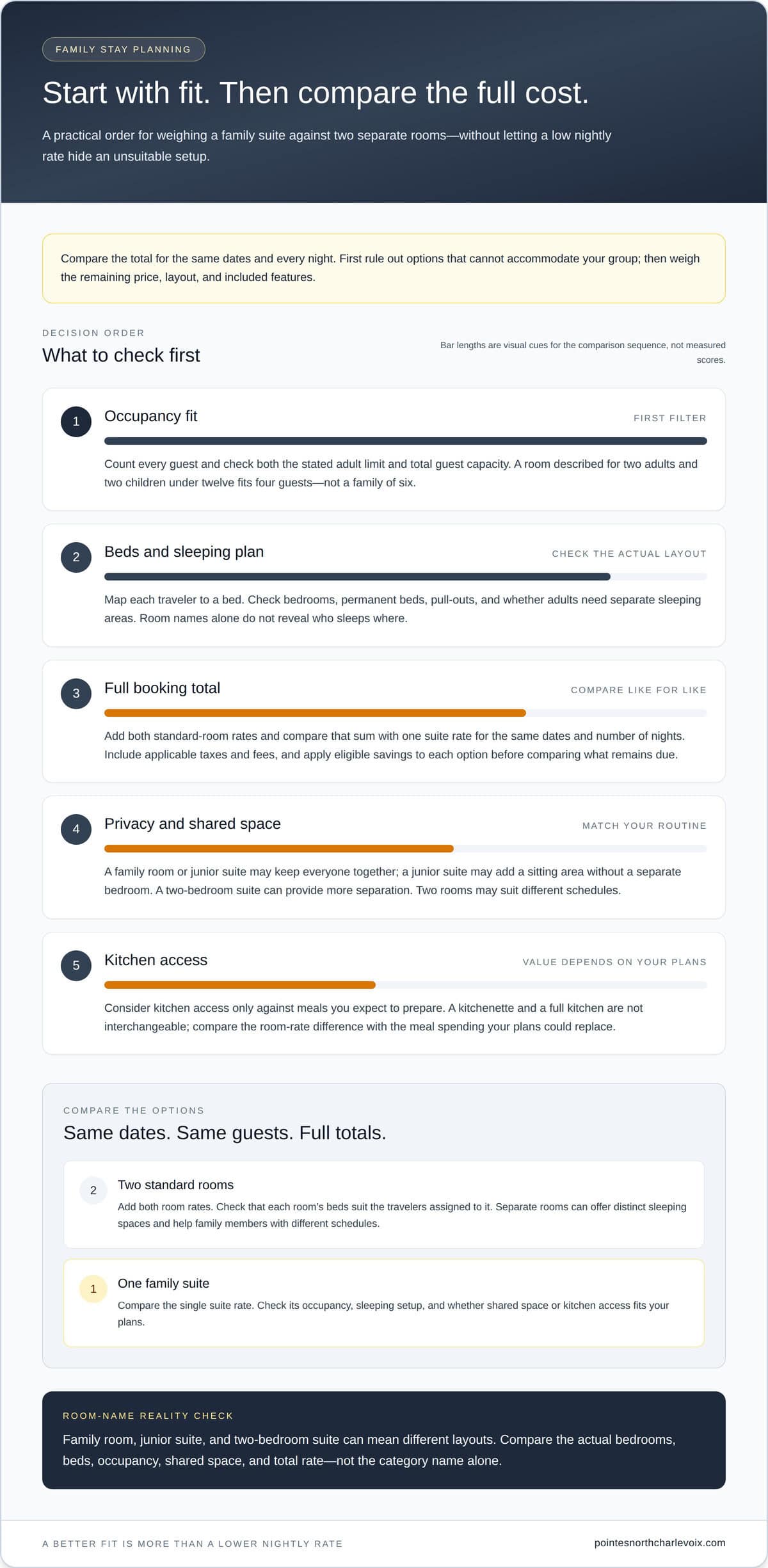
Room labels describe different layouts, but they don’t guarantee the same sleeping setup. A family room may keep everyone together, while a junior suite can add a sitting area without creating a separate bedroom. A two-bedroom suite offers more separation. During travel planning, compare the actual bed configuration and total rate, not the category name alone.
A two-night road-trip example shows how totals can shift. The family needed two standard rooms at each overnight stop.
That comparison shows why separate rooms aren’t always the less expensive choice. A family room or junior suite may suit a group that wants one shared base, but the layout may not provide separate bedrooms. A two-bedroom suite can offer more privacy while keeping the group together. Compare the total for your stay, then weigh it against how much separation your family wants.
Separate standard rooms can work well when their beds suit the travelers assigned to them. They can also help family members with different schedules. A suite may be more practical if shared downtime matters or separate bedrooms would help everyone settle in. Compare both the total rate and how your family will use the space.
- Compare rates for the same dates and number of nights.
- Look at bedrooms, beds, and shared living space, not just room labels.
- Choose the layout that balances the total cost with your family’s privacy needs.
Occupancy limits and practical sleeping arrangements
A room’s advertised sleeping capacity doesn’t tell you whether it suits your family. Compare the property’s stated maximum adult occupancy with your group’s mix of adults and children. For five adults, the published adult limit matters more than a general description saying a room sleeps five. A spacious suite may still have a lower adult limit than your group needs.
Picture a family of six traveling together. Count every guest, then separate adults from children before comparing a family room with multiple standard rooms. For example, a family room described as accommodating two adults and two children under twelve fits four guests, not six. The group needs an option with suitable occupancy and sleeping space.
Map each traveler to a bed rather than relying on the room label. A property may use terms such as “family room” or “suite,” but those names alone don’t show who sleeps where. Note which beds are permanent and which are pull-outs, then consider whether children can share and whether adults need separate sleeping areas. This bed-by-bed check can rule out an unsuitable layout before you compare rates.
- Count each adult and child in the traveling group.
- Compare that count with the stated maximum adult occupancy and total guest capacity.
- Assign each traveler a bed, including any pull-out sleeping spaces.
- Compare one larger suite with two rooms if one room cannot fit everyone comfortably.
For a family of six, two rooms may provide a practical split if one room’s capacity or layout falls short. Connecting rooms can keep relatives nearby, but a request for them isn’t guaranteed. Treat them as a preference, not the basis of your sleeping plan. Choose arrangements that work even if the rooms are separate.
Occupancy is both a fit test and a pricing detail. First rule out options that can’t accommodate your group, then compare the remaining layouts and totals. That way, a low nightly rate won’t outweigh the basic need for everyone to have a suitable place to sleep.
Kitchen access and meal costs
A kitchenette can affect your family’s trip budget, but only if it suits the meals you plan to prepare. Compare the suite rate with the cost of two rooms, then consider whether kitchen access could replace meals purchased elsewhere. A higher room rate may still make sense if cooking fits your routine, while a lower rate may win if you expect to eat out.
That figure shows how meal choices can affect the overall trip budget, not what every family will spend. Compare the cost of planned breakfasts with the room-rate difference, and count only savings your family expects to make.
Before counting kitchen access as a benefit, identify what the accommodation provides. A full kitchen and a kitchenette aren’t interchangeable, and the setup affects which meals are practical. If you plan to prepare food, match your intended meals to the listed facilities. Don’t assume a suite includes cooking equipment based on its name alone.
- Write down which meals your family expects to prepare during the stay.
- Estimate those meals using your family’s own grocery and dining plans.
- Compare the estimated meal spending with the difference between room totals.
- Consider convenience too, especially for early breakfasts or children’s familiar foods.
Kitchen access matters most when it changes real spending or makes family routines easier. For a short stay with restaurant meals planned, it may add little financial value. For a longer trip, compare the full lodging and meal budgets together. That gives you a clearer answer than judging the suite by its nightly rate alone.
Pointes North Inn
Pointes North Inn offers suite options that help families compare space, sleeping arrangements, and kitchen access with the total booking cost. The One Bedroom Suite and Two Bedroom Suite have different layouts to consider when deciding whether one shared suite suits your group better than separate rooms. If a kitchenette is a priority, include the King Suite with Kitchenette in your comparison.
Start with the factors that shape your stay: how many people are traveling, how they’ll sleep, and whether kitchen access matters. Then compare the best-fitting layout with the alternatives. This keeps the decision grounded in your family’s needs, not just the room label.
For a family stay, explore the suite options at Pointes North Inn and choose the layout that fits your plans. Contact Pointes North Inn to discuss your stay.
Choose the Stay That Fits Your Family
Match your lodging choice to the kind of trip you want, not just the room category. Consider whether shared downtime, separate sleeping areas, or preparing simple meals matters most to your family. That preference can guide your final comparison and help make the stay more restful from the moment you arrive.
If you’re still weighing whether it is cheaper to book a suite for a family, compare the options that fit your plans. Pointes North Inn offers a One Bedroom Suite, a Two Bedroom Suite, and a King Suite with Kitchenette, giving families different layouts and kitchen access to consider. The right fit depends on your group’s needs and travel priorities.
Contact Pointes North Inn to talk through your stay and take the next step toward a comfortable family getaway.
Frequently Asked Questions
Is It Cheaper to Book a Condo Suite or Two Hotel Rooms for a Family of Six?
It depends on the dates, room rates, and whether one suite can accommodate all six travelers. To decide whether it’s cheaper to book a suite for a family, compare the full-stay cost of the suite with the combined cost of two rooms. Then check whether the sleeping arrangement works for everyone, rather than assuming the advertised capacity guarantees a comfortable fit.
What Is the Average Price of a Hotel Suite Compared With Two Standard Rooms?
There’s no useful average that applies to every destination and booking. Rates vary by travel dates, property, room type, and number of guests. For a meaningful comparison, price a suite and two standard rooms for the same stay, then compare the full totals and what each option includes. A broad average could obscure the difference that matters for your trip.
How Many People Can Hotel Suites Accommodate, and What Are the Occupancy Rules?
Capacity varies by suite, and the property’s stated occupancy limit determines who may stay in the room. Pay particular attention to the maximum adult occupancy if your group includes several adults. A general “sleeps” description doesn’t replace that limit. Also match the listed beds to your group, since a sleeping spot may not provide the separation or comfort every traveler needs.
How Much Can a Family Save by Booking a Suite With a Kitchenette?
Savings depend on how much your family would otherwise spend on meals and how often you’ll use the kitchenette. Compare your planned meal spending with the difference between lodging options. The kitchenette offers financial value only if the meals you prepare reduce your overall trip costs.