
The lower nightly rate isn’t always the better-value stay. In a condo hotel vs vacation rental comparison, the right choice depends on the full cost and the kind of getaway you want. A condo hotel combines a suite-style stay with hotel operations, while a vacation rental offers a more independent home base. Neither is automatically the better fit.
It’s easy to focus on the room price when planning a getaway. But extra charges, meal costs, housekeeping, privacy, and the space you need all affect the value. The best option is the one that suits your plans and provides comforts you’ll actually use.
Compare the total price and possible extra costs, then weigh hotel-style services against a vacation rental’s independence. Consider how housekeeping, space, and privacy may shape your stay. This guide offers practical criteria to help you choose accommodations that fit your plans.
Key Takeaways
- Choose lodging around your travel style, location priorities, and how much independence you want.
- Compare the full stay cost, including possible extra charges, rather than relying on the nightly rate alone.
- Weigh the convenience of hotel services and housekeeping against the privacy and flexibility of a rental.
- Match the layout to your group’s needs, then explore suite options that could make your getaway more comfortable.
Condo Hotel vs Vacation Rental: Which Fits?
Choose based on your trip: a condo hotel suits travelers who want a suite in a hotel setting, while a vacation rental can offer a more independent home base. For the condo hotel vs. vacation rental decision, weigh the location, your group, and how you plan to spend your days.
Rental Income and Occupancy
For an owner, rental income and occupancy depend on booking demand, nightly rates, operating costs, and how often the property is available. A condo hotel may use hotel-style booking and management, while a vacation rental is often managed as an individual home. Neither format guarantees higher occupancy or income. Owner-use limits and seasonal demand can affect both.
For a getaway, consider the trip itself: a condo hotel suite may balance cost and amenities for a three-night couples trip. A private home may better suit a week-long reunion of eight, especially if guests want shared living space.
Rules and Rental Restrictions
Before purchasing a US vacation rental, identify the permit and operating requirements that apply where the property is located. Requirements depend on the relevant jurisdiction, so there is no single nationwide permit answer. For a condo hotel, review zoning, association rules, and rental restrictions that may affect how owners can use or rent units.
According to the Legal Information Institute, condo titles often include restrictive covenants that control unit use and maintenance. Read those covenants alongside the governing documents. Permitted uses, rental arrangements, and maintenance obligations can affect whether a property fits your travel or ownership plans.
Taxes, Insurance, and Liability
Tax treatment depends on ownership, personal use, rental income, expenses, and applicable jurisdiction. Insurance needs also vary with the property’s use and management arrangement. Compare coverage for the building, unit, guest stays, and potential liability instead of assuming a standard homeowner policy covers every rental activity.
Financing and resale depend on property details, too. Compare loan terms, ownership documents, rental limits, ongoing costs, and the likely buyer pool. Before purchasing either type, review the governing documents, rental rules, insurance arrangements, financial records, and any management agreement. These steps can reveal restrictions affecting income, use, or a future sale.
| Option | Travel style | Trip fit | Location consideration |
|---|---|---|---|
| Condo hotel | Suite stay with hotel setting | Couples getaway | Often near tourist areas and transit |
| Vacation rental | More independent home base | Group trip or quieter stay | May be outside tourist areas or in a mountain, lake, or forest setting |
Choose the option that best matches your group, destination, and preferred level of independence.
Hotel rates and additional costs
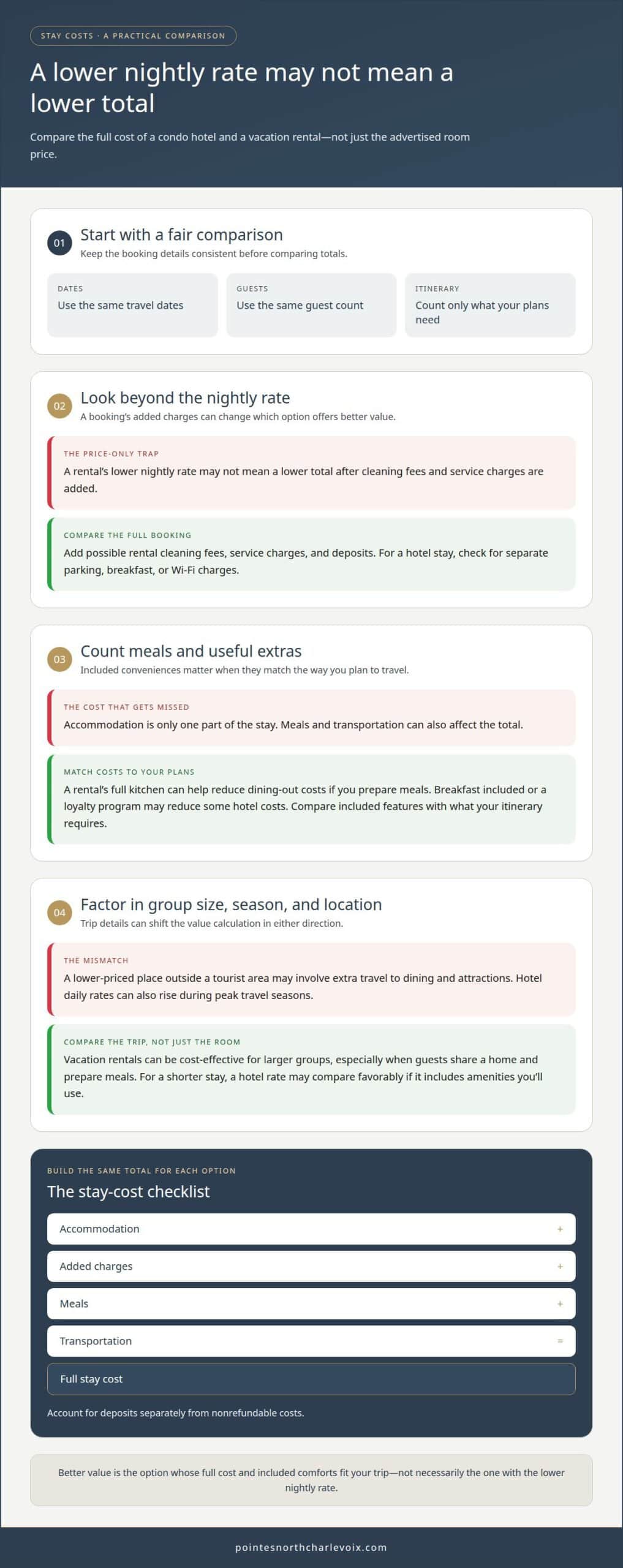
A low nightly rate can hide the true cost of a stay. Compare the full booking total for a condo hotel and vacation rental, including charges added after the advertised rate. Trip length, group size, meal plans, and location can all affect which option offers better value.
Use the same travel dates and guest count for each option. Then compare these possible expenses:
- Vacation rental: Add cleaning fees, service charges, and deposits to the rental cost.
- Hotel stay: Look for separate charges for parking, breakfast, or Wi-Fi.
- Meals: A rental’s full kitchen can help reduce dining-out costs if you prepare meals.
- Season and location: Hotel daily rates can rise during peak travel seasons, while rentals outside tourist areas may cost less.
For example, a rental’s lower nightly rate may not mean a lower total once cleaning and service charges are added. A hotel stay with breakfast included or a loyalty program may reduce some costs. Compare what each booking includes with what your itinerary requires, rather than paying for conveniences you won’t use.
Group size can change the calculation, too. Vacation rentals can be cost-effective for larger groups, especially when guests share a home and prepare meals. For a shorter stay, a hotel rate may compare favorably if it includes amenities you’ll use. Consider transportation as well: a less expensive rental outside a tourist area may mean extra travel to dining and attractions.
Build a simple total for each option: accommodation, added charges, meals, and transportation. Use matching dates and guest numbers, and account for deposits separately from nonrefundable costs. If the property type itself is unfamiliar, Pointes North Inn’s condo hotel overview explains the model as you compare stays.
Hotel service and housekeeping
Service can shape a stay as much as the room itself. Conventional hotels commonly offer housekeeping, concierge services, and room service. A vacation rental usually centers on private use of the property, with guest support handled by its host or property manager. The difference is the service model, not simply the building type.
Major hotel chains commonly follow standard practices intended to create consistency in service, cleanliness, and amenities. That structure can suit travelers who value familiar routines, such as requesting fresh towels or asking a concierge about local dining. A condo hotel combines a residence-style unit with hotel operations, but specific services depend on the property.
Vacation rental housekeeping often follows a different rhythm. Guests may need to keep the space tidy during their stay and follow checkout instructions, rather than receive daily service. That trade-off can suit travelers who prefer privacy and fewer interruptions, but may be less convenient for those who want staff to handle routine room care.
- For regular room care: Hotel housekeeping can reduce chores during a getaway.
- For local guidance: A hotel concierge may help with dining or activity questions.
- For a self-directed stay: A rental offers more independence, with support generally arranged through its host or manager.
- For a condo hotel: Consider the balance of private living space and property-level services.
Think about the help you’ll actually use. A traveler arriving late may value a clear check-in process, while a family spending the day outdoors may care more about housekeeping arrangements. Compare each property’s service details, including how guests reach support and what housekeeping covers. This helps you weigh hotel-style assistance against a more independent routine without assuming every property offers the same services.
Vacation rental space and privacy
A separate bedroom, living area, or outdoor space can change how a getaway feels. Compare the layout with your group’s routines, not just the sleeping arrangements.
Vacation Rental Space
Vacation rentals may include multiple bedrooms, a living area, and sometimes a backyard. Some also have kitchens, laundry facilities, or other outdoor spaces. These features give guests room to spread out and manage daily routines in one property. For example, a family can use a living room for shared downtime while keeping bedrooms separate.
Condo hotels also offer a range of layouts, from studios to units with one to three bedrooms. A two-bedroom unit can suit guests who want separate sleeping areas without renting a full home. Compare bedroom count and shared space with your group’s needs, especially if everyone expects to gather indoors after a day out.
Privacy and Living Space
A private rental can provide a home-like setting, often with its own living area and, in some cases, a backyard. That setup may appeal to travelers seeking more separation from other guests. A condo hotel gives guests a private residence-style unit within a hotel setting. The balance of private space and shared surroundings varies by property.
Think through a typical day before choosing. If one guest likes an early night while others stay up, separate bedrooms and a living area can make the arrangement more comfortable. If outdoor privacy matters, compare features such as a backyard or private balcony. A Suite with Private Balcony offers an outdoor area attached to the suite.
Match the layout to how you’ll relax, dine, and spend time together. For a suite with a private outdoor area, explore suite options for your getaway.
Pointes North Inn: Pet Friendly Condominium
Pointes North Inn offers a Pet Friendly Condominium for travelers planning a getaway with a pet. If you’re choosing between a private rental and a condo hotel, compare your needs with the suite accommodations available at the inn.
A One Bedroom Suite may suit a couple or solo traveler seeking a separate bedroom. A Two Bedroom Suite gives travel companions distinct sleeping spaces, while a King Suite with Kitchenette offers a kitchenette for guests who value having one in their suite. As you narrow your options, consider your group, preferred layout, and whether a pet-friendly stay matters most.
For a comfortable retreat that fits your travel plans, explore Pointes North Inn’s suite options.
Choose the Stay That Fits Your Getaway
Before you decide, picture the moments you want this trip to make room for. Maybe it’s a slow start, a quiet pause between outings, or an easy place to gather at day’s end. Choosing between a condo hotel and a vacation rental is about shaping the experience around your priorities, not following a default lodging choice.
Think about what would help you settle in and enjoy your time away. Your stay should support the pace you want, whether you’re planning a restorative escape or time together. Let that picture guide your choice, and select accommodations that make the getaway feel personal from the moment you arrive.
If Pointes North Inn feels like a good fit for your plans, contact Pointes North Inn to take the next step toward a welcoming retreat.
Frequently Asked Questions
Conclusion: What’s Best for You?
The best stay supports your priorities without adding unwanted responsibilities. Choose a condo hotel for a residence-style unit within a hotel operation; choose a vacation rental when a private-home setup better suits your plans. Before deciding, consider who handles guest support, property upkeep, and booking logistics. For a suite-based stay, Pointes North Inn offers several layouts, including a King Suite with Kitchenette.
What is the difference between a condo hotel and a vacation rental?
A condo hotel combines condominium-style units with hotel lodging operations, while a vacation rental is a property rented for a guest’s stay. A condo hotel may place individually owned units into a professionally managed rental pool. A vacation rental can be a house or unit arranged for a private stay. The distinction matters to owners because management structures and unit-use terms can differ.
How do condo hotel rental programs work for owners?
A rental program places an owner’s unit in a pool managed for guest stays. The management arrangement coordinates bookings and rental operations, while the owner’s agreement governs participation and financial terms. For example, Pointes North Inn operates as a condotel, with individual owners placing units into a professionally managed rental pool. Owners should understand the agreement’s rules for availability, personal use, expenses, and income allocation.
What are typical condo hotel and vacation rental fees and costs?
There’s no single typical total because charges depend on the property and booking terms. Vacation rental reservations may add cleaning fees, service charges, or deposits. Hotel stays may have separate parking, breakfast, or Wi-Fi costs. Owners also need to account for ongoing property expenses and management arrangements. Compare the full stay total or, for a purchase, the complete ownership obligations before deciding.
Can condo hotel owners use their units, and what restrictions apply?
Owner use depends on the condominium documents and rental-program agreement. These documents set the terms for personal stays, rental availability, and unit use. A unit committed to a managed rental pool may have scheduling requirements that affect when its owner can stay there. Review the governing documents together, since association restrictions and management rules can both shape owner use.
How do management, maintenance, and guest services compare?
A condo hotel’s management arrangement can coordinate rentals and property operations, while responsibilities for a vacation rental depend on its host or manager. Housekeeping and guest support also vary by property. For an owner, the key distinction is who handles bookings, maintenance coordination, and guest questions, and which duties remain personal responsibilities. Read the management agreement to understand how tasks are divided before committing.