What makes a corporate stay comfortable after a demanding workday? The right accommodation gives travelers room to rest and settle into their routines. For planners searching for corporate lodging, start by matching the suite layout and features to the people making the trip.
Compare lodging options by privacy, layout, and practical comforts, rather than assuming every traveler needs the same setup. One-bedroom and two-bedroom suites, lofts, and kitchenette options offer different ways to make a stay at Pointes North Inn feel more comfortable.
This guide covers how to compare suite layouts, distinguish accommodation needs from meeting requirements, and plan for solo travelers or teams. Use the criteria below to choose lodging that supports work routines and downtime.
Key Takeaways
- Identify travelers’ work routines and downtime needs before choosing a layout.
- Compare one-bedroom, two-bedroom, and loft suites according to privacy preferences and how people plan to use the space.
- Match features such as a kitchenette, fireplace, or private balcony to travelers’ priorities.
- Plan meeting space and event requirements separately from accommodation.
- Consider condominium-style lodging when a suite layout and independent living space better fit the trip than a standard room.
What Corporate Lodging Needs to Deliver on a Work Trip
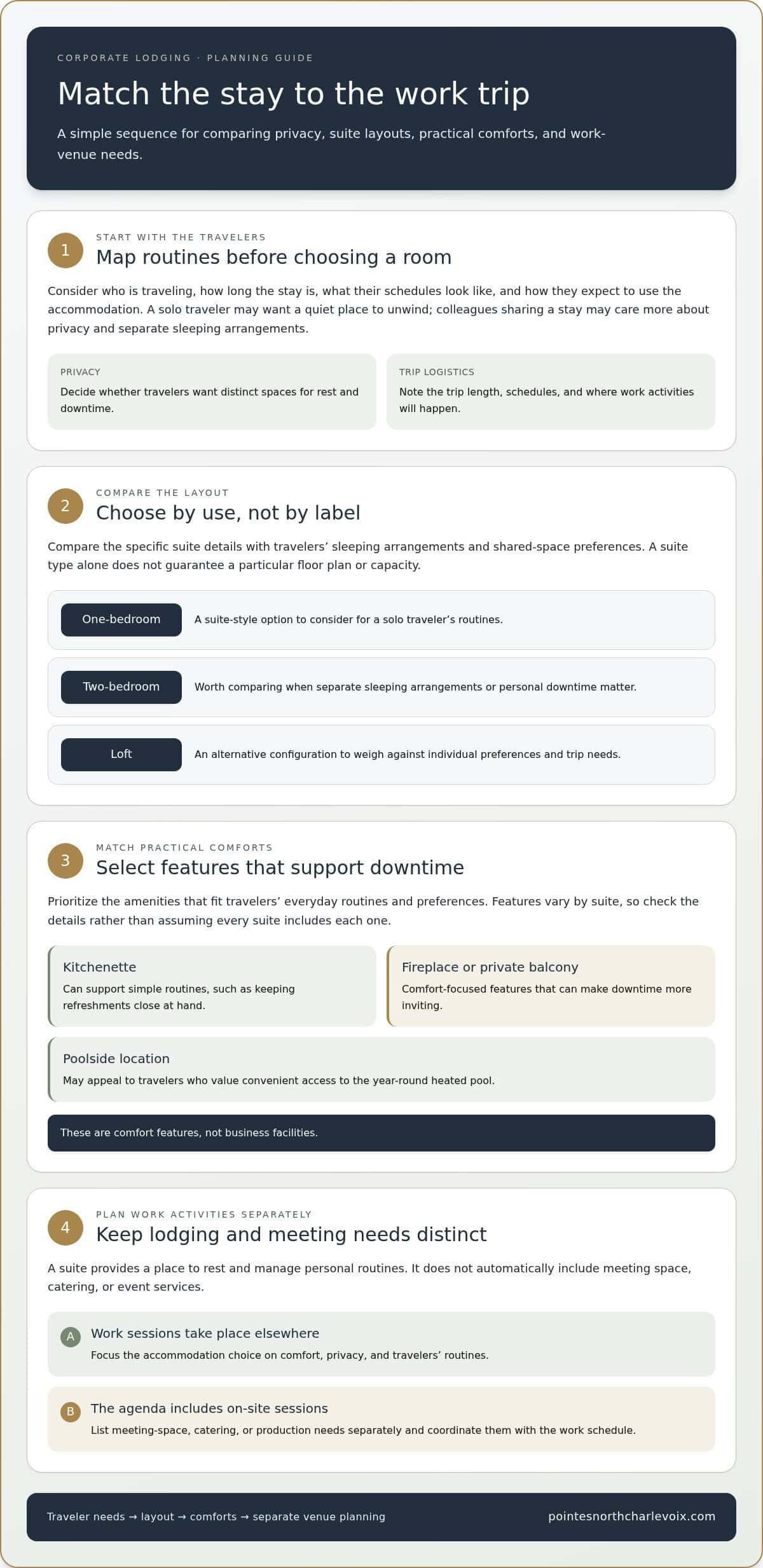
Corporate lodging is accommodation selected for business travel, team stays, or retreats. The best fit depends on the trip schedule and how travelers will use the space, not just where they’ll sleep. A solo traveler may need a quiet place to unwind, while colleagues sharing accommodation may place more importance on privacy and separate sleeping arrangements.
Start with a checklist: the travelers, their preferred layout, useful amenities, trip length, and where work activities will take place. Keep accommodation requirements distinct from the agenda. A suite stay does not automatically include meeting space, catering, or event services, so plan for those needs separately when the itinerary calls for them.
Which business-stay needs should shape the lodging decision?
Consider each traveler’s schedule, privacy preferences, and expected time in the accommodation. For a short visit filled with off-site activities, a simple setup may be enough. For a longer assignment, more room to manage everyday routines and unwind may matter more. If colleagues will share a stay, discuss sleeping arrangements and how they expect to use shared areas before choosing a layout.
Meeting facilities are not essential for every business trip. If work sessions are taking place elsewhere, prioritize a comfortable base that suits the travelers. If the trip requires a dedicated meeting venue, include it as a separate item in the itinerary rather than assuming the lodging provides one.
- Privacy: Decide whether travelers want distinct spaces for rest and downtime.
- Everyday routines: Identify useful features, such as a kitchenette for simple refreshments.
- Layout: Compare options with the travelers’ sleeping arrangements and shared-space preferences in mind.
- Trip logistics: Consider the length of stay, schedules, and where work activities will happen.
Why consider suite-style corporate lodging?
A standard room may work well for some trips. A suite is worth considering when travelers want a different layout or more space for routines beyond sleeping. Compare the actual suite details with your group’s priorities; labels alone do not tell you whether a particular arrangement will suit everyone.
A kitchenette can support simple routines, such as keeping refreshments close at hand. Apartment hotels, sometimes called extended-stay hotels, are another format designed around a more residential style of stay. Condominium-style lodging also emphasizes independent suite living. Read this guide to condominium-style lodging to learn how the condotel model differs from a conventional hotel.
How to Compare Corporate Lodging Features and Suite Layouts
Begin with the travelers’ needs, not the room label. A solo traveler may want a comfortable place to unwind, while colleagues sharing a stay may value more separation between sleeping and downtime. Compare the layout and specific features against those preferences rather than assuming a suite type guarantees a particular floor plan or capacity.
| Traveler preference | Layout or feature to compare | How it may help |
|---|---|---|
| Solo traveler seeking a comfortable retreat | One-bedroom suite | A suite-style alternative to a standard room, with a layout to consider for individual routines. |
| Travelers who want more separation | Two-bedroom suite | An option to compare when separate sleeping arrangements or personal downtime matter. |
| Traveler open to a different arrangement | Loft suite | An alternative configuration to weigh against individual preferences and trip needs. |
| Flexible everyday routines | Kitchenette | Can make it easier to keep simple refreshments or routines close at hand. |
| Relaxing after work | Fireplace, private balcony, or poolside location | Comfort-focused features that can make downtime more inviting. |
Which suite layout works for solo travelers and small teams?
A one-bedroom suite can suit a traveler looking for a suite-style stay. A two-bedroom layout may be worth comparing when travelers prefer separate sleeping arrangements or more personal downtime. A loft offers another configuration, but the best choice depends on the travelers and the specific suite details. Consider privacy and shared-space preferences rather than assuming a layout guarantees particular sleeping arrangements or capacity.
Which in-suite amenities support a more comfortable stay?
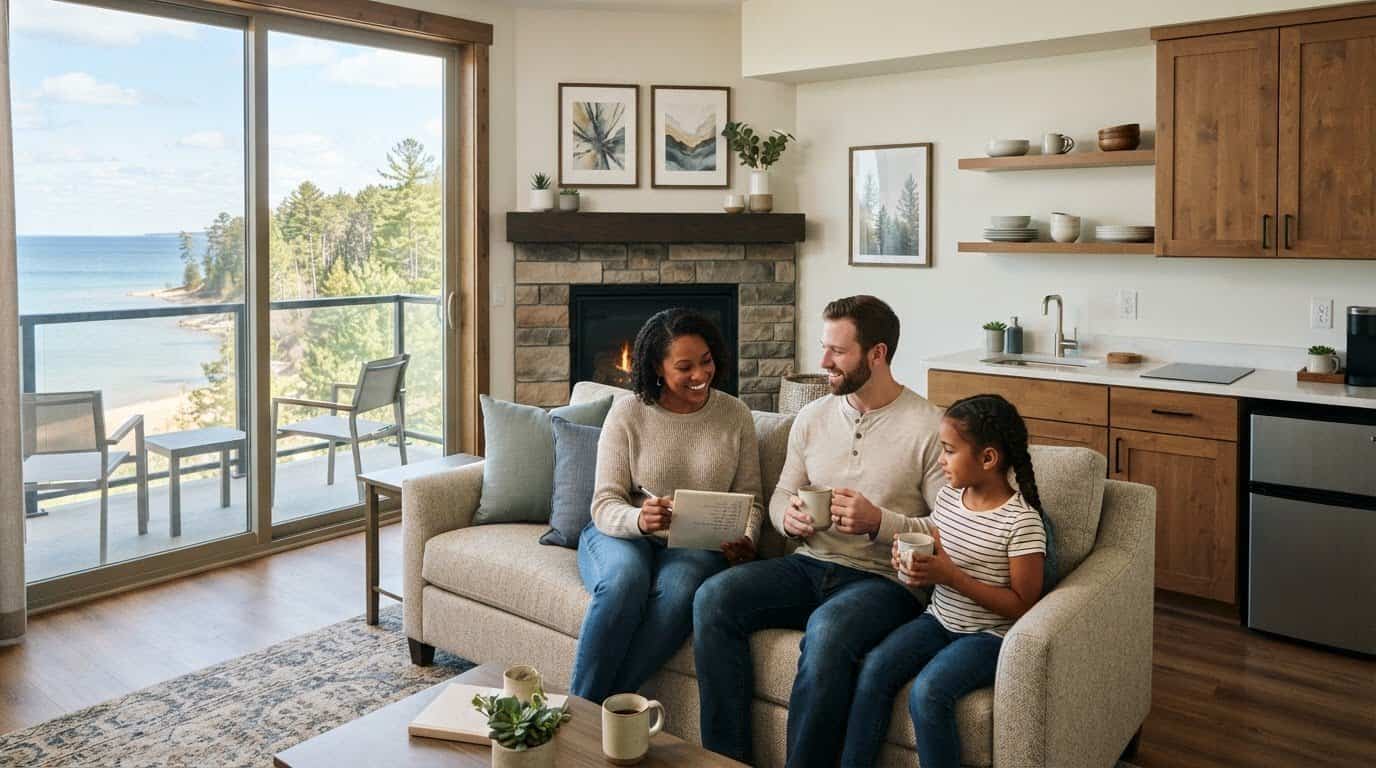
A kitchenette can support independent routines, such as keeping basic refreshments close at hand. A fireplace or private balcony can make downtime feel more relaxing, while a poolside suite may appeal to travelers who value convenient access to the year-round heated pool. These are comfort features, not business facilities.
Features vary by suite. Compare the details that matter to your travelers instead of assuming every suite includes every amenity. Explore the suite amenities overview to narrow your preferences before choosing a stay.
Does Corporate Lodging Need a Meeting Room or Full-Service Hotel Amenities?
Accommodation and work venues serve different purposes. A suite provides a place to rest and manage personal routines. A conference or event plan may also require dedicated meeting space, catering, or production support. List those needs separately, then coordinate them with the work schedule.
If meetings are planned elsewhere, focus the accommodation search on the travelers’ comfort and routines. If the agenda includes on-site sessions, plan the venue requirements independently and arrange lodging around the confirmed schedule. This keeps the accommodation choice tied to what travelers need from their stay.
| Option | Potential advantages | Potential trade-offs |
|---|---|---|
| Suite-style lodging | May offer separate living space and a kitchenette for more independent routines. | Do not assume it includes meeting rooms, catering, or event production. |
| Conventional hotel room | May suit a short stay or a traveler who prefers a simpler room arrangement. | May provide less separation between sleeping and downtime, depending on the room. |
| Dedicated event venue plus separate lodging | Keeps accommodation and conference or event requirements distinct. | Requires coordinating schedules and logistics across separate parts of the trip. |
When is suite lodging a better fit than a conventional hotel room?
Choose according to the trip rather than assuming a suite is always better. For a longer stay, separate living space may make it easier to switch from work mode to rest. A kitchenette can add flexibility for simple routines. For a brief visit with a full schedule, a conventional room may be suitable. Let privacy preferences, trip length, and time spent in the accommodation guide the decision.
When should planners prioritize a separate event venue?
If the agenda includes presentations, group sessions, catering, or event production, list those requirements separately from sleeping arrangements. Once the work schedule and venue plan are set, choose lodging that fits travelers’ routines and the timing of their activities. This avoids expecting the accommodation to meet business requirements it is not designed to serve.
How to Plan a Smooth Corporate Stay for Individuals or Teams
Plan around the people making the trip. A solo traveler may want a private place to unwind, while colleagues sharing accommodation will need to agree on rooming preferences and use of shared space. Work through the details in advance so the layout suits the travelers rather than requiring them to adapt after arrival.
What should a planner decide before booking?
Start with who is traveling, the trip dates, the intended length of stay, and whether each person needs a separate reservation or the group is considering shared accommodation. Then gather preferences that could shape the suite choice, such as separate bedrooms, a kitchenette, or another feature that matters to the travelers. Plan work sessions and events separately; they shape the itinerary but are not the same as lodging requirements.
- Identify the travelers: Distinguish solo stays from colleagues sharing accommodation.
- Agree on priorities: Note privacy, sleeping arrangements, everyday routines, and relevant accessibility needs.
- Choose a layout: Compare one-bedroom, two-bedroom, and loft options against those priorities.
- Coordinate details: Align the reservation plan with travel dates and the intended length of stay.
How can teams make a suite stay comfortable for everyone?
Before choosing a configuration, discuss how each person expects to use shared space and when they’ll want time to themselves. Someone with an early schedule may have a different routine from a colleague who works late. Agreeing on rest, shared areas, and personal time can help prevent small differences from becoming sources of friction.
Raise individual needs early, including accessibility preferences and whether anyone plans to travel with a pet. Pointes North Inn offers pet-friendly condominium options for stays that include a pet. Keep the conversation practical and respectful: focus on what is needed to make the arrangement comfortable.
Finally, compare available layouts and amenities with the priorities travelers have shared. Do not treat a suite label as a guarantee of a particular floor plan or every feature. Review the details relevant to the stay, then choose an arrangement that supports work routines and downtime.
Why Pointes North Inn Can Suit a Suite-Style Corporate Stay
Business lodging should offer a comfortable place to settle in after a full day. Pointes North Inn provides condominium suite accommodations for travelers who prefer independent suite living to a standard room. It can suit work trips and team stays where lodging is the priority, with work sessions and events planned separately around the itinerary.
Which Pointes North Inn features may matter to business travelers?
Pointes North Inn offers one-bedroom and two-bedroom suites, loft suites, and poolside units. Compare the layouts with travelers’ preferences for privacy and downtime. Kitchenettes support simple, independent routines. Some suites include fireplaces or private balconies, and pet-friendly condominium options suit travelers bringing a pet.
Poolside units and the year-round heated pool provide another option for unwinding between scheduled activities. Consider which features would make a meaningful difference to the travelers rather than treating every amenity as essential.
How can a corporate planner take the next step?
Use the trip’s practical needs as your guide: who is traveling, how they prefer to arrange their stay, and which features would help them feel comfortable. Keep lodging decisions separate from the work-session or event plan, then compare suite options with those priorities in mind. This makes it easier to choose accommodation that supports the schedule and leaves room for restorative downtime.
Explore the suite accommodations and rental details for an overview of Pointes North Inn’s condominium-style lodging. For more on this accommodation model, read the related guide to condominium hotel stays.
Choose a Suite Stay That Fits the Way You Travel
Choose corporate lodging according to travelers’ routines. Compare suite layouts with privacy needs, trip length, and shared downtime in mind, then prioritize amenities that will make the stay more comfortable. Keep lodging choices distinct from meeting and event plans so each part of the trip serves its purpose.
Pointes North Inn offers one-bedroom and two-bedroom suites, loft suites, and poolside units. Across its suite options, features include kitchenettes, select fireplaces, pet-friendly condominiums, and suites with private balconies. The year-round heated pool offers another way to unwind after a busy day. These choices make suite-style accommodation worth considering for a work trip or team stay.
Ready to compare layouts and find a comfortable fit for your plans? Explore Pointes North Inn suite accommodations and choose an option that gives travelers room to focus, recharge, and enjoy their time away.
Frequently Asked Questions
What should corporate lodging include?
Corporate lodging should fit the work schedule while giving travelers practical comfort and room to rest. Start with privacy, a suitable layout, useful amenities, trip length, and reservation logistics. For a solo traveler, a suite may support a comfortable routine. For colleagues sharing a stay, compare sleeping arrangements and shared space. Treat meeting rooms, catering, and event services as separate requirements, and include them when the itinerary calls for them.
Is a suite a good choice for a business trip?
A suite can be a good choice if you value more separation between sleeping and downtime. A kitchenette may also support simple, independent routines. Consider how long you’ll stay, how much time you’ll spend in the accommodation, and which features matter to you. A standard hotel room may suit a shorter visit or a schedule that keeps you out for most of the day.
Can corporate lodging work for a small team?
Yes. Suite-style lodging can suit a small team when the layout fits everyone’s preferences for privacy, rest, and shared space. Compare individual reservations with a shared accommodation plan, and discuss rooming preferences before choosing. One-bedroom and two-bedroom suites and lofts offer different layouts to consider. Review the specific suite details rather than assuming a label guarantees a particular capacity or floor plan. Clear expectations about shared areas can help everyone settle in comfortably.
What is the difference between a condo hotel and a standard hotel?
A condo hotel combines condominium-style accommodations with professional management. At Pointes North Inn, individually owned units are placed in a professionally managed rental pool, and the lodging emphasizes independent suite living. A standard hotel generally offers a conventional hotel-room format. Compare the specific suite layout and features you prefer rather than assuming all condo hotels or standard hotels offer the same amenities.
How do I choose the right suite layout for a work trip?
Choose according to who is traveling and how they’ll use the accommodation. A one-bedroom suite may suit an individual seeking a suite-style stay, while a two-bedroom layout may be worth considering when travelers prefer separate sleeping arrangements. A loft is another option to compare. Think about privacy, routines, trip length, and shared downtime, then review the details of the specific suite instead of assuming its layout or capacity.
Are kitchenettes useful for corporate stays?
A kitchenette can be useful if you value flexibility for simple everyday routines, such as keeping basic refreshments on hand. It may be especially appealing during a longer stay or when your schedule doesn’t follow typical meal times. A kitchenette is not the same as a full kitchen, so base your choice on the specific suite features and the level of independence you want during the trip.
Should corporate lodging include meeting rooms?
Not necessarily. If meetings are scheduled elsewhere, choose lodging for comfort, privacy, and practical amenities, then plan around the work itinerary. If the trip requires presentations, group sessions, or event production on site, treat those as separate venue requirements. Corporate lodging means accommodation for business travel, but it does not automatically mean the property is a meeting venue or provides event services.