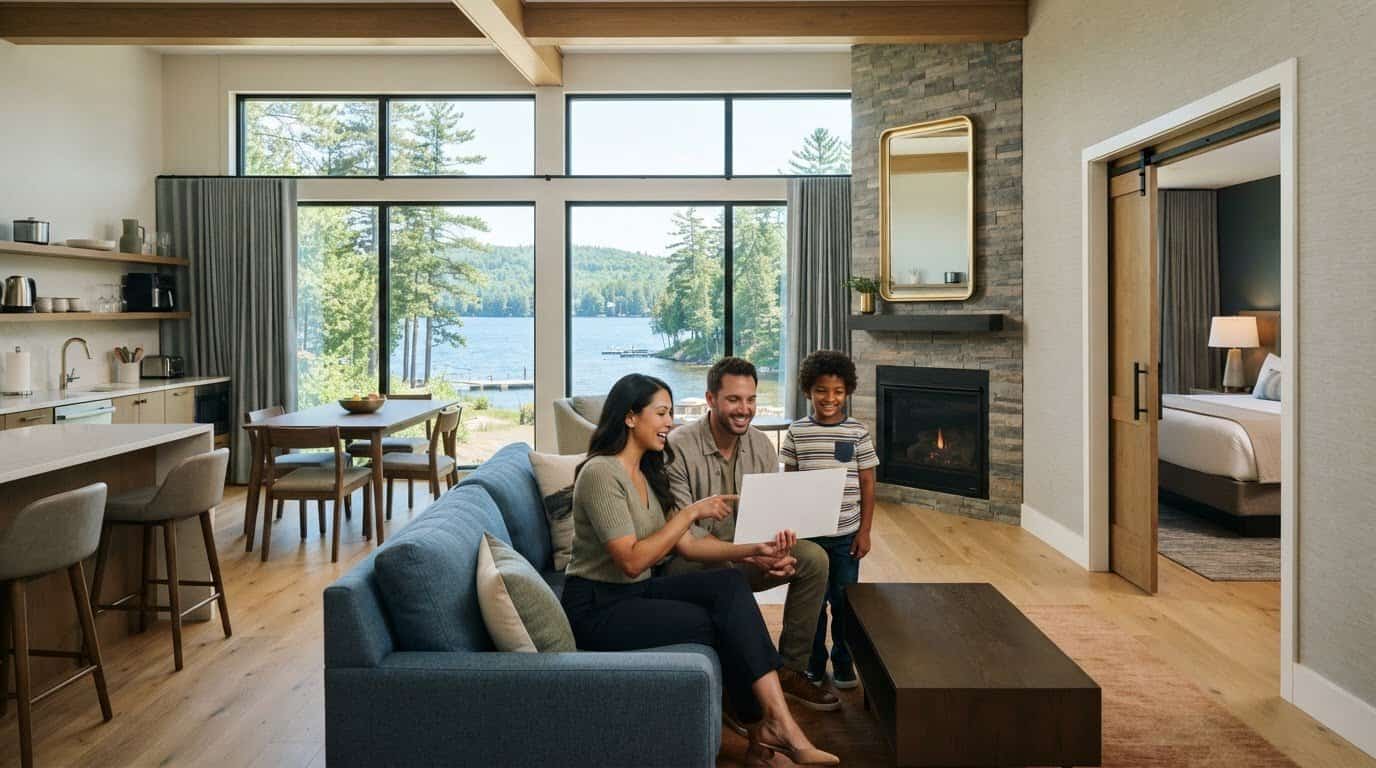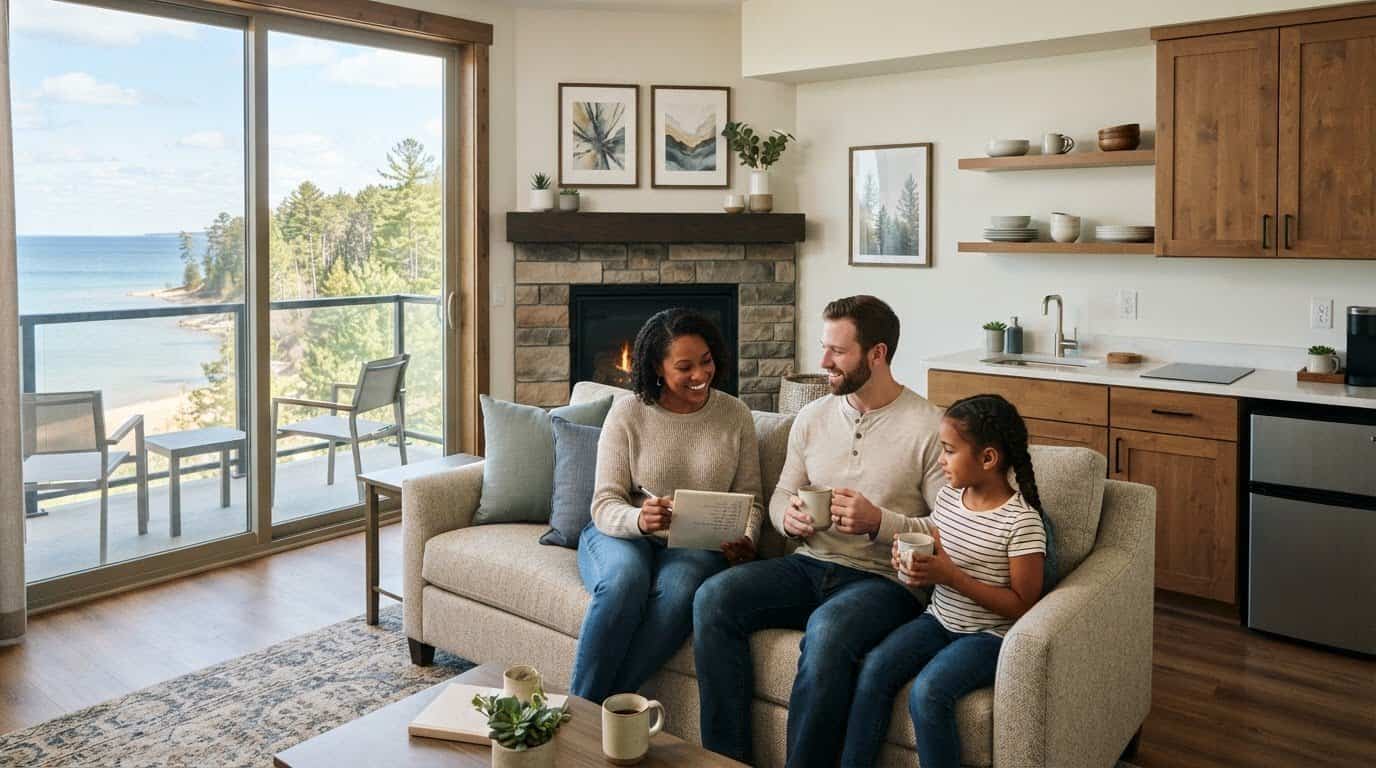
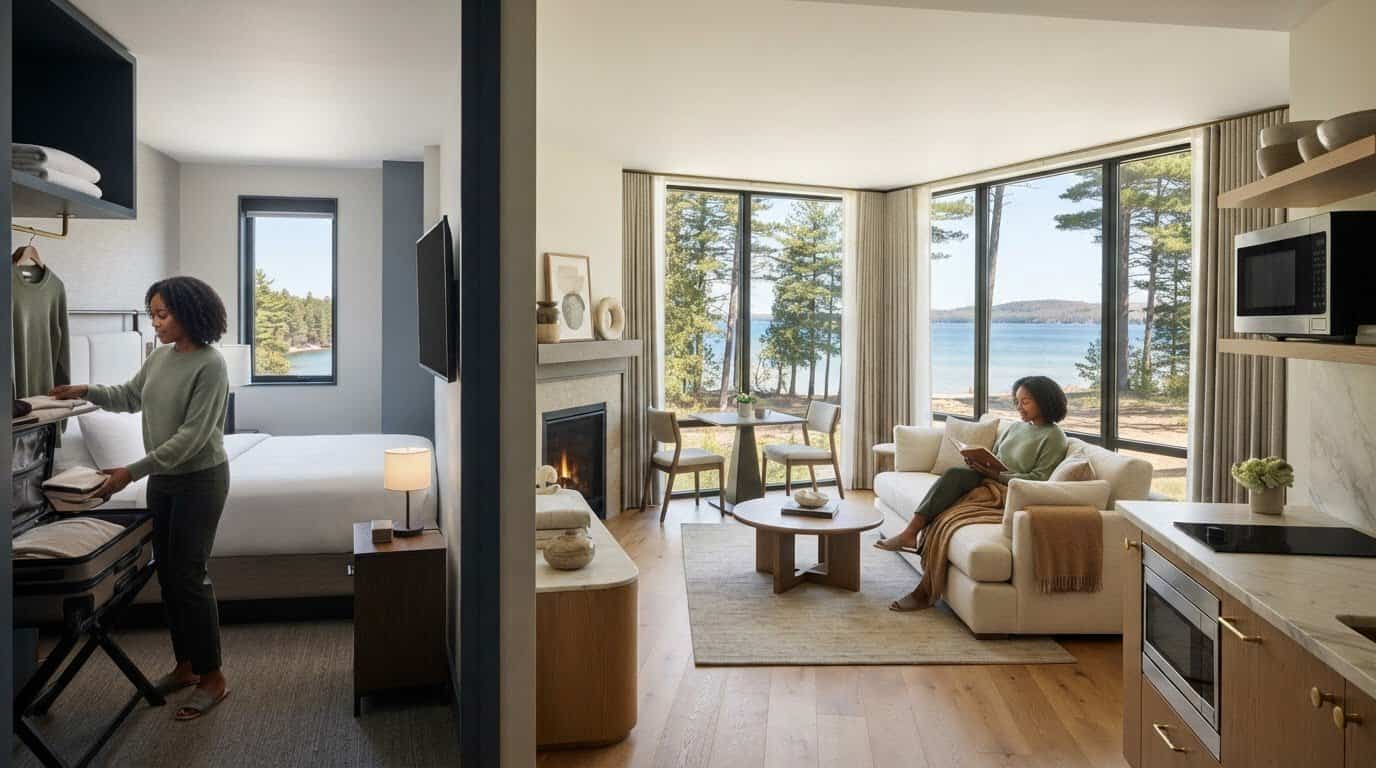
The room that feels spacious on night one can feel different by week two. When weighing hotel suite vs standard room for long stays, the real question isn’t simply where you’ll sleep. It’s whether the room can support the everyday routines that make a longer trip comfortable.
A standard room may cover the basics, and extra space can seem unnecessary at first. But unpacking, relaxing between outings, or preparing a simple meal can change how a room feels over time. A suite may offer more room to settle in, though the features that matter most depend on how you’ll spend your days.
This guide compares space, everyday comfort, amenities, and value to help you choose lodging that fits your trip. You’ll learn when features such as a kitchenette or separate sleeping area can add practical value, and when a standard room may be enough. Pointes North Inn offers a range of suite layouts, including options with kitchenettes, fireplaces, and private balconies for a more independent stay.
Key Takeaways
- In the hotel suite vs standard room for long stays comparison, look beyond the room category to how the layout fits your daily routines.
- Separate living and sleeping areas can make downtime more comfortable, especially when travelers keep different schedules.
- A kitchenette can offer flexibility for snacks and simple meals, but its value depends on how often you’ll use it.
- Compare usable space, privacy, amenities, and time spent in the room to judge value across the whole stay.
- Prioritize the features that matter most by matching your room choice to a typical day on your trip.
Hotel Suite vs. Standard Room for Long Stays: What Changes?
A standard hotel room is generally organized around a place to sleep, while a suite typically adds defined living space. That distinction can seem minor during an overnight visit. Over a longer stay, it can affect where you relax, keep your belongings, and find privacy when you’re spending time indoors.
These labels don’t describe universal floor plans. Room size, layout, and amenities vary by property, and “suite” doesn’t mean the same arrangement everywhere. For a helpful overview, What is a Hotel Suite? describes the concept and common suite configurations. Focus on the actual layout, not just the room category.
What does a standard hotel room usually offer?
A standard room often centers on a bed, with the remaining space arranged for basic in-room needs. It can be a comfortable fit if your days are full and you mainly return to sleep, shower, and get ready. For a short visit or a trip with little indoor downtime, a compact layout may feel simple and easy to manage.
A longer stay can change that calculation. Suitcases, coats, work items, or groceries may compete for the same limited surfaces, and there may be little separation between sleeping and relaxing. Think through where you’ll put your belongings and what you’ll do during an unplanned afternoon indoors. Room dimensions and included amenities differ by property, so “standard” shouldn’t be treated as a fixed specification.
What makes a hotel suite different?
A suite generally provides more defined space than a standard room. The difference that matters most isn’t just extra floor area, but how the space works. A separate living area can let one person rest while another reads or watches a screen. It can also make downtime feel less like sitting beside the bed all day.
Some suites have distinct sleeping and living areas; others use a more open arrangement. Look for a layout that lets your routines coexist, especially if you’re sharing the accommodation or expect to spend quiet hours indoors. Storage and privacy are practical comforts, not just signs of a higher room category.
Features depend on the property and unit. Some suites include kitchenettes, fireplaces, or balconies, but the word “suite” alone doesn’t promise any of them. At Pointes North Inn, suite options include layouts and selected features such as kitchenettes, fireplaces, and private balconies. Compare the details that support your stay rather than relying on the label.
That’s the useful lens for hotel suite vs standard room for long stays: picture an ordinary day in the room. If you’ll be out most of the time, a sleep-focused layout may be all you need. If you’ll unpack, take breaks, or share the space for different activities, defined living areas may make the stay more comfortable.
How Suite Space Supports Everyday Long-Stay Routines
A room feels different when it has to support more than bedtime. During a longer stay, you might answer emails, read, rest after a busy day, or get ready while someone else is still sleeping. Usable areas for different activities can make those moments feel less crowded and help the room work with your routine.
Separation becomes more useful as a stay lengthens. It gives everyday activities room to coexist, so the bed doesn’t have to serve as the whole room.
When a separate living area earns its space
Think about the rhythms of everyone sharing the room. If one person wakes early and another sleeps in, a distinct area for quiet reading or getting ready can help them avoid disturbing each other. It also gives you somewhere to sit during downtime without turning the bed into your only place to relax. Suite layouts differ, so look at the actual floor plan rather than assuming every suite has a separate bedroom or living room.
How a kitchenette can change the daily rhythm
Where a kitchenette is included, it can make simple routines easier: keeping drinks close, preparing a light snack, or enjoying breakfast at your own pace. That convenience can matter when you’d rather take a quiet break in your suite than plan every small meal around going out. A kitchenette supports modest food and drink needs, not every use of a full kitchen. Explore suite layouts with kitchenette options to see how the feature can fit an independent stay.
Space to unpack can also help a room feel settled. Put clothing and daily essentials where they’re easy to reach, keep travel items together, and leave a clear surface for things you use often. That small change can make the room feel less temporary, especially when you return to it day after day.
Before choosing, picture an ordinary day rather than an idealized one. Where will you sit during a quiet hour? Will anyone need to work, take a call, or turn in early while others stay up? Which items do you want within easy reach? These questions help distinguish space that looks generous in a listing from space that will genuinely support your habits.
- For different sleep schedules, prioritize a layout that lets one person settle quietly while another moves around.
- If you expect regular downtime, consider seating or a living area separate from the bed.
- If easy snacks and drinks matter, look for a kitchenette and treat it as a convenience for simple routines.
The best layout isn’t necessarily the one with the most room. It’s the one that makes everyday patterns feel comfortable, from unpacking to winding down.
Suite vs. Standard Room: Which Offers Better Long-Stay Value?
Value isn’t determined by room category alone. A suite earns its place when its layout or features improve parts of your stay that you’ll use repeatedly. If you expect to spend most of your days out, extra living space may add little. Compare what each option lets you do comfortably, then weigh those benefits against your priorities and budget.
| What to compare | Standard room | Suite |
|---|---|---|
| Usable space | Often organized around sleeping and getting ready. | Generally offers more defined space, though layouts vary. |
| Privacy | Activities may share one main area. | Some layouts offer more separation between activities. |
| Kitchenette access | Not a defining feature of the room category. | Available in some suites, depending on the property and unit. |
| Time spent in the room | Can suit stays with limited indoor downtime. | May be more useful when you expect to spend more time inside. |
When a standard room may be the smarter fit
If your trip is built around activities and you’ll mainly return to sleep, shower, and get ready, a standard room may fit comfortably. It can also suit travelers who prefer a straightforward layout and don’t need extra living space. That’s a preference-based choice, not a lesser experience. Choose based on how you plan to travel, rather than the room category’s name.
When a suite may be worth prioritizing
A suite may be a better fit if you’ll spend regular downtime in your accommodation, share the space with someone on a different schedule, or value a feature such as a kitchenette, fireplace, or private balcony. The benefit comes from using those features throughout your stay, not simply from booking a higher category. Pointes North Inn’s suite layouts and features provide options to compare.
Make the comparison specific to your trip. Ask yourself:
- How often will I return to the room between activities?
- Will anyone need quiet or privacy while another person is awake?
- Which features would I use regularly, rather than just enjoy once?
- Would a simpler layout feel easier for this trip?
For the hotel suite vs standard room for long stays decision, count recurring benefits, not just square footage. A little extra separation can matter day after day, while unused space or amenities may not add meaningful value. The right choice fits your schedule, travel companions, and preferred way to spend time indoors.

How to Choose the Right Room for an Extended Stay
A good room choice starts with your real routine, not the number of nights alone. A longer trip filled with outings may call for a different layout than a stay that includes work, quiet afternoons, or several people sharing the space. Use these four steps to turn your habits into practical priorities.
Match the room to your daily schedule
Step one: estimate how much time you’ll spend in the room. Think beyond sleeping. Will you work, eat, rest, or mostly head out after getting ready? Then consider everyone traveling. Early starts, late returns, or different sleep schedules can make privacy and room to move more valuable. Let your expected routine guide the space you need.
Identify the routines you want the room to support
Step two: name the moments that happen repeatedly. Perhaps you like a quiet coffee before the day begins, need a place to unwind after activities, or prefer to keep your belongings organized rather than packed away. Include any shared-space considerations. This makes it easier to judge whether a compact layout will feel comfortable or restrictive over time.
Prioritize features you’ll use repeatedly
Step three: separate must-haves from appealing extras. A kitchenette may suit simple food and drink routines; a fireplace or private balcony may add comfort if you expect to enjoy it often. Pool access could matter if swimming is part of your plans. Features depend on the selected accommodation, so compare the property amenities with your habits instead of choosing by a feature’s appeal alone.
Make two short lists: “use often” and “nice, but optional.” If a feature would only be used once, it may not deserve priority over a layout that supports everyday comfort. Pointes North Inn offers different suite layouts, with selected options featuring kitchenettes, fireplaces, private balconies, or poolside settings.
Compare layouts before deciding
Step four: compare the layouts that fit your priorities. Look at how sleeping, relaxing, and storage areas are arranged, and consider whether everyone can follow their routine without getting in one another’s way. The hotel suite vs standard room for long stays choice becomes clearer when you evaluate each option against the same list of needs, rather than comparing category names alone.
Finally, revisit your must-haves and ask whether each room supports the rhythm of your trip. A standard room may suit a full schedule and a preference for simplicity; a suite may better support regular downtime or a feature you’ll use day after day. Choose the accommodation that feels like a comfortable base for the way you plan to travel.
Why a Condominium Suite Can Feel More Livable for a Long Stay
A conventional, sleep-focused hotel room is designed mainly as a place to return to between activities. A condominium suite can offer a different feel: more independent living space and, depending on the unit, features that support everyday routines. For a longer visit, that distinction may help the accommodation feel like a comfortable base rather than somewhere to sleep and leave again.
Independent suite living has clear boundaries. A kitchenette, where provided, can support simple food and drink routines, but it isn’t restaurant service. A condominium-style stay also shouldn’t be mistaken for room service or valet service. Its value is in having a private accommodation layout that better suits how you want to spend time during your stay.
What a professionally managed condotel means for guests
A condotel is a lodging operation that includes condominium-style units. Guests stay in condominium-style accommodations, while the lodging operation provides a managed setting. This model can suit travelers who value a more independent stay, though specific layouts and features differ by accommodation. Learn more about how the condotel model works to understand the setup.
That distinction can shape your expectations. Rather than assuming a traditional hotel-room setup or services, consider what the accommodation itself offers for your daily rhythm: space to relax, a place to prepare a simple snack if a kitchenette is included, or a layout that better fits your travel party. The right fit depends on the unit’s details and how you plan to use it.
Explore suite options that fit your stay
Pointes North Inn offers one- and two-bedroom suites, loft suites, and poolside accommodations. Selected options feature kitchenettes, fireplaces, or private balconies, and pet-friendly condominium options are also available. Think about which features support your plans. A kitchenette may be useful for simple meals, while a fireplace or balcony may matter if you expect to spend relaxed time in your suite.
As you compare hotel suite vs standard room for long stays, consider not only the amount of space but also the kind of independence you want. A condominium suite can be appealing if having room for daily routines is part of what makes a trip restful. If a simpler, sleep-focused room fits your schedule better, that may be the more comfortable choice for you.
Picture an ordinary day in your accommodation, from settling in to winding down. Then compare suite layouts to find one that supports the way you want to stay.
Choose a Stay That Feels Like Your Own
Before you book, picture an ordinary day during your trip, not just arrival night. What would make it easier to settle in, pause between plans, and feel at ease when you return? Let that picture guide your hotel suite vs standard room for long stays decision. The right choice supports the pace you want, whether that means keeping things simple or creating more room to relax.
A longer trip is also a chance to choose comfort with intention. Prioritize the features you’ll genuinely enjoy rather than focusing only on labels or expectations. A thoughtful fit can make everyday moments feel smoother and leave more energy for the reason you’re traveling.
Explore Pointes North Inn vacation rentals and choose a suite layout that fits the way you want to stay.
Frequently Asked Questions
Is a hotel suite better than a standard room for a long stay?
Not automatically; the better choice depends on how you’ll use the room. A suite may be more comfortable if you’ll spend time there between plans or need different activities to happen at once. A standard room can suit a trip with full days away and few in-room needs. Picture a typical day and a quieter day, then consider which layout would work well for both.
What is the main difference between a hotel suite and a standard room?
A suite generally offers more defined space, while a standard room is typically arranged around sleeping and getting ready. The exact distinction depends on the property, so don’t rely on the label alone. Compare the layout: Can you sit somewhere other than the bed? Is there a distinct area for another activity? Those details reveal more about how the room may feel during a longer visit.
Can you cook in a hotel suite?
Only if the specific accommodation has facilities suited to the food preparation you have in mind. A kitchenette may be useful for simple meals, snacks, or drinks, but the term doesn’t necessarily mean the suite has a full kitchen or every appliance you’d use at home. Review the unit’s stated features and plan meals around what’s provided, rather than assuming every suite supports cooking.
Is a suite worth it if you are staying for a week?
It can be, if you expect to use its layout or features throughout the week. Consider whether you’ll spend downtime in the room, share it with someone, or benefit from a feature you’ll return to regularly. If your plans keep you out most of the day and you mainly need a place to sleep, a standard room may be a comfortable fit. The number of nights alone won’t determine value.
How do I choose between a suite and a standard room for an extended stay?
For the hotel suite vs standard room for long stays decision, start with your daily schedule, then list what the room must help you do. Separate essentials from extras, and compare specific layouts against that list. For example, a traveler working in the room may value a usable sitting area, while someone out all day may prefer a straightforward place to rest. Choose based on repeated needs, not the category name.
Do hotel suites always include a separate bedroom?
No. “Suite” can describe different layouts, and the label alone doesn’t guarantee a separate bedroom with a door. Some accommodations have clearly divided sleeping and living areas, while others use a more open arrangement. If separation matters for sleep, privacy, or different schedules, look for a floor plan or room description that shows how the areas connect before choosing.
Are condominium suites different from regular hotel rooms?
They can feel different because a condominium suite emphasizes an independent accommodation style rather than a conventional sleep-focused room. At Pointes North Inn, individual units are placed in a professionally managed rental pool. That management structure helps explain how condominium-style lodging operates, but it doesn’t mean every unit has the same layout or features. Focus on the particular accommodation’s details and the kind of stay you prefer.