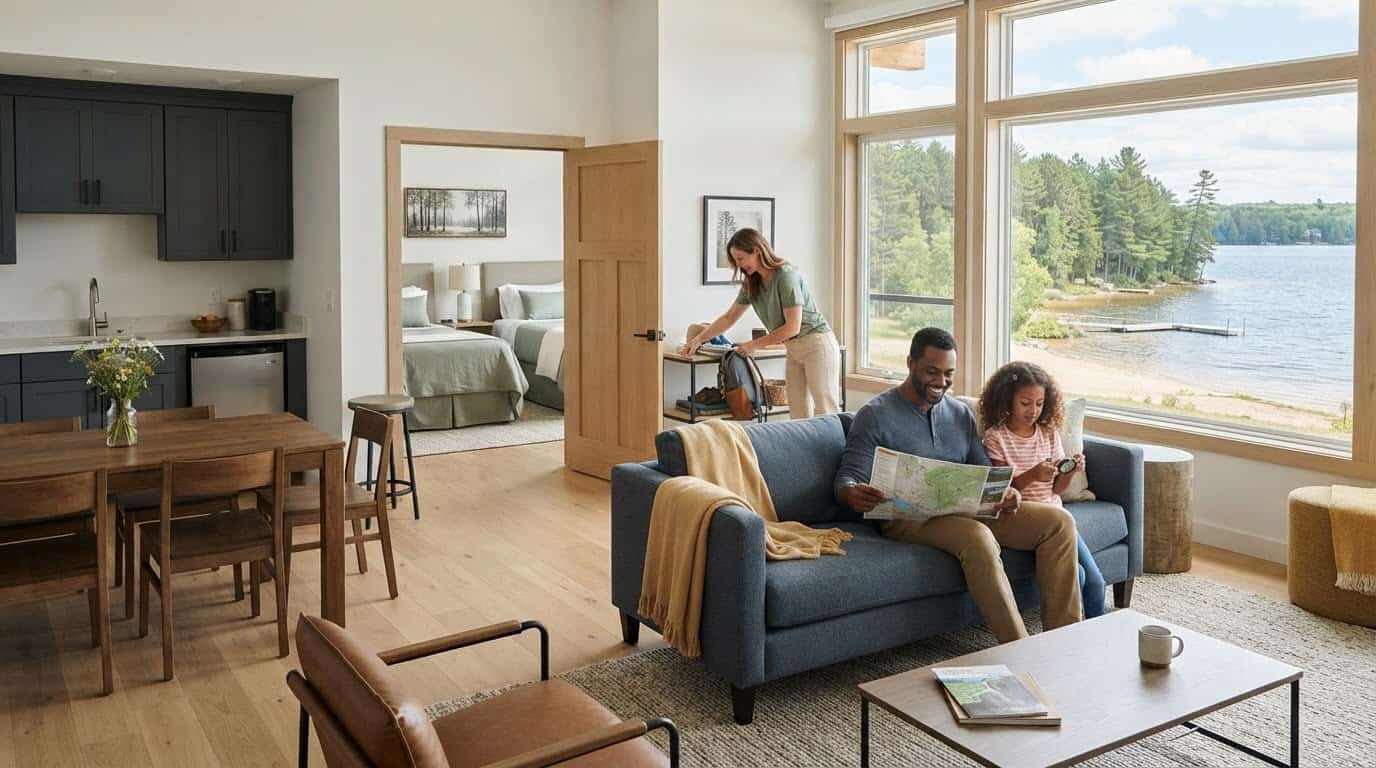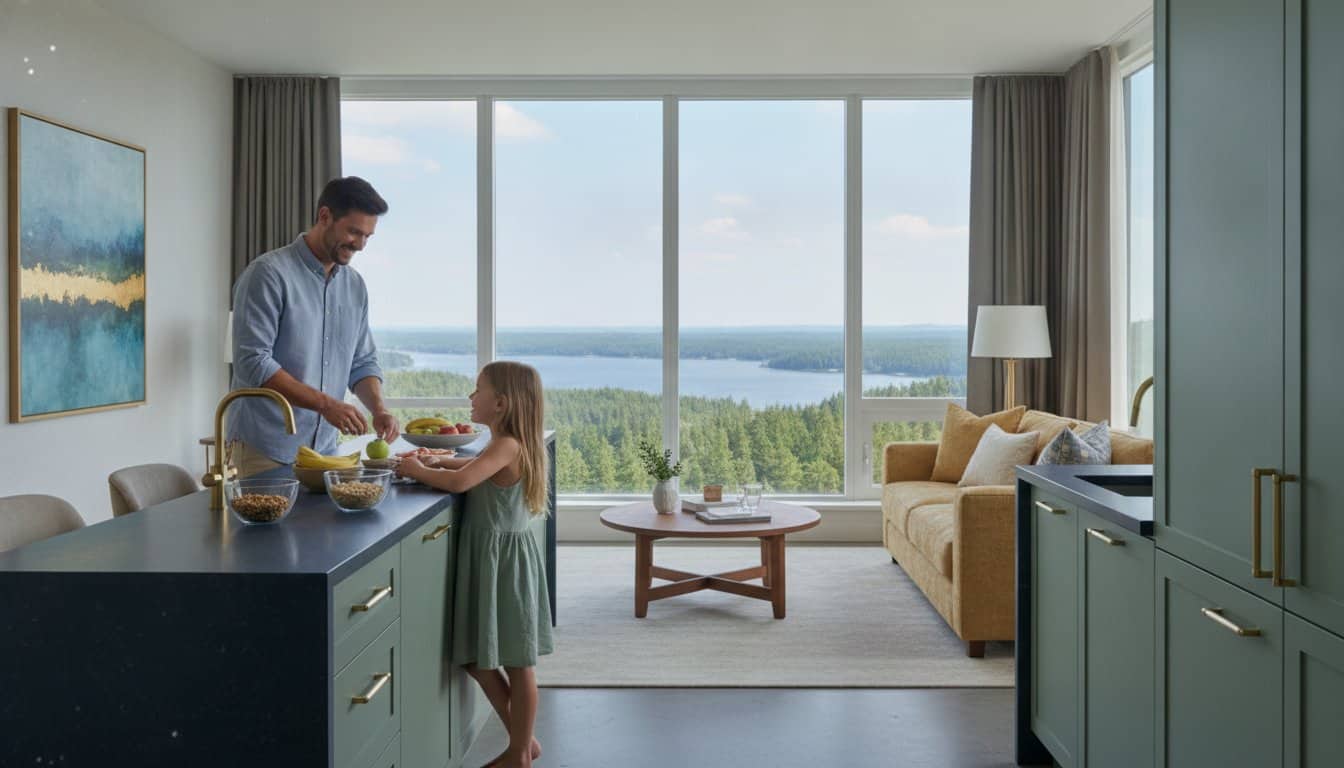
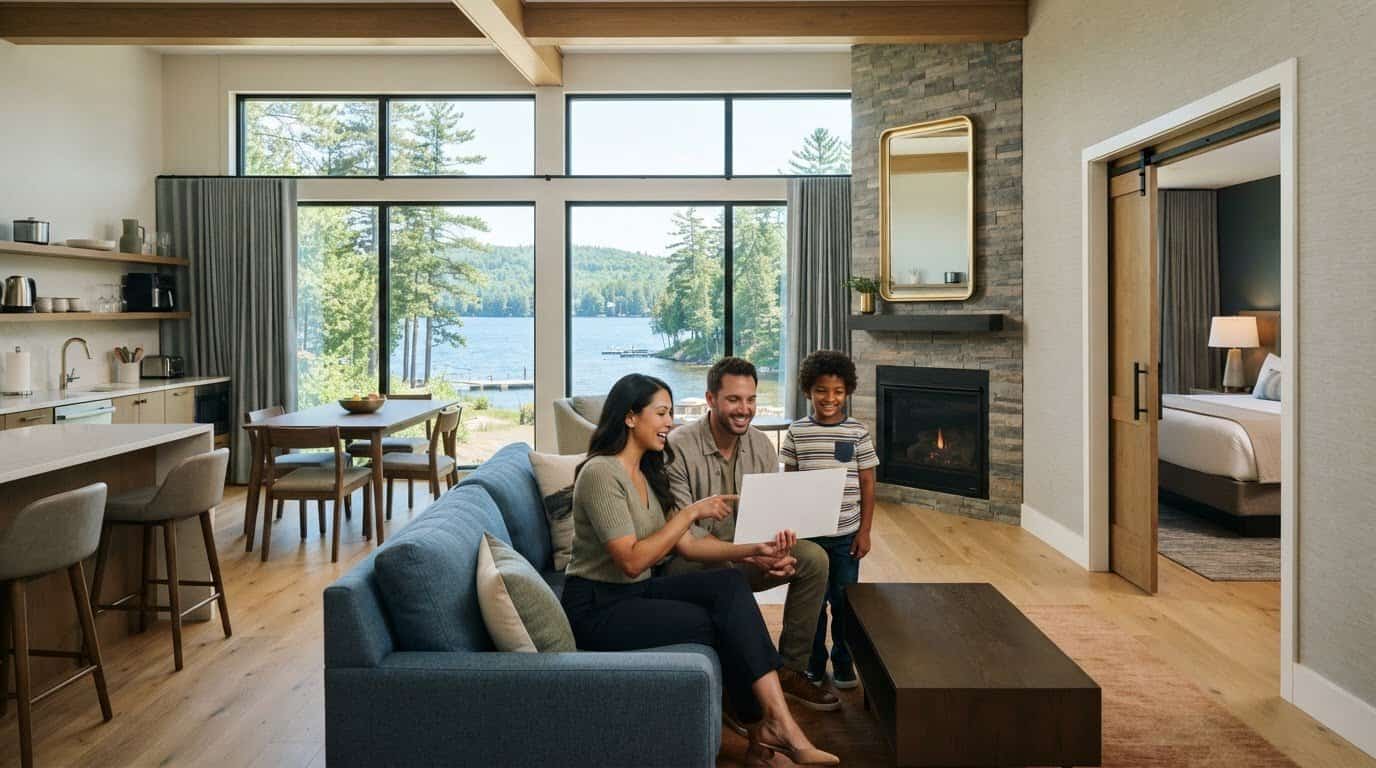
What if the room with the longest list of amenities isn’t the best choice for your trip? Knowing how to choose the best room at a suite hotel starts with how you’ll use the space: who’s sleeping where, whether you’ll prepare meals, and which comforts will make your stay easier. Similar room names can describe different layouts, so comparing the details can help you avoid booking a suite that doesn’t fit your plans.
Start by matching the layout to your travel group, then weigh the features that matter most. A separate bedroom may offer welcome privacy, while a kitchenette, fireplace, private balcony, or pet-friendly option could make a difference depending on your needs. Pointes North Inn offers one- and two-bedroom suites, loft suites, and poolside units, with select accommodations featuring kitchenettes or fireplaces. Use this guide to compare layouts, sleeping arrangements, and amenities, then choose a suite that suits the way you plan to travel.
Key Takeaways
- Learn how to choose the best room at a suite hotel by matching the layout to your group and how you’ll use the space.
- Compare one-bedroom, two-bedroom, and loft-style layouts with privacy and sleeping arrangements in mind.
- Separate must-have amenities from nice-to-have extras so you can focus on features that will make a real difference.
- Use a side-by-side checklist to compare room descriptions and set clear expectations before booking.
- Explore Pointes North Inn’s suite categories, and compare each unit’s listed features rather than assuming every suite has the same amenities.
How to Choose the Best Room at a Suite Hotel for Your Trip
The best suite isn’t automatically the largest one or the room with the most features. It’s the one that fits your group and the way you’ll use the space. A couple spending most of the day out may need a different setup than a family planning to unwind together or a guest traveling with a pet.
Begin with the practical details: who’s coming, how everyone will sleep, how long you’ll stay, and what routines the room should support. Does anyone need a separate sleeping area? Will you spend time relaxing in the suite, or mainly return there to sleep? Would a kitchenette suit your meal plans? Answering these questions makes it easier to compare room descriptions without getting distracted by extras.
Room names don’t always tell the whole story. “Suite” can refer to different layouts, so look for details about how the sleeping and living spaces are arranged. A quick overview of hotel suite definitions and types can help explain the terminology, but the specific room description is what matters when choosing a place to stay.
Which questions should you answer before comparing rooms?
Write down your needs before opening several room descriptions. Keep the list short and specific so you can compare each option consistently.
- Who is traveling, and does anyone need a separate sleeping area?
- Will you spend meaningful downtime in the suite, or mostly use it as a place to sleep?
- How long is the stay, and which everyday routines should the space support?
- Do you have practical requirements, such as a pet-friendly option or a kitchenette?
Separate essentials from preferences. A pet-friendly condominium may be necessary for one trip, while a fireplace may simply be a welcome comfort on another.
Does the biggest suite always make the best choice?
Extra space can be valuable when a group needs privacy or plans to spend time together in the suite. But if your itinerary keeps you out for most of the day, a larger living area may matter less than a feature you’ll use regularly. If preparing simple meals is a priority, for example, a kitchenette may support your routine better than extra space.
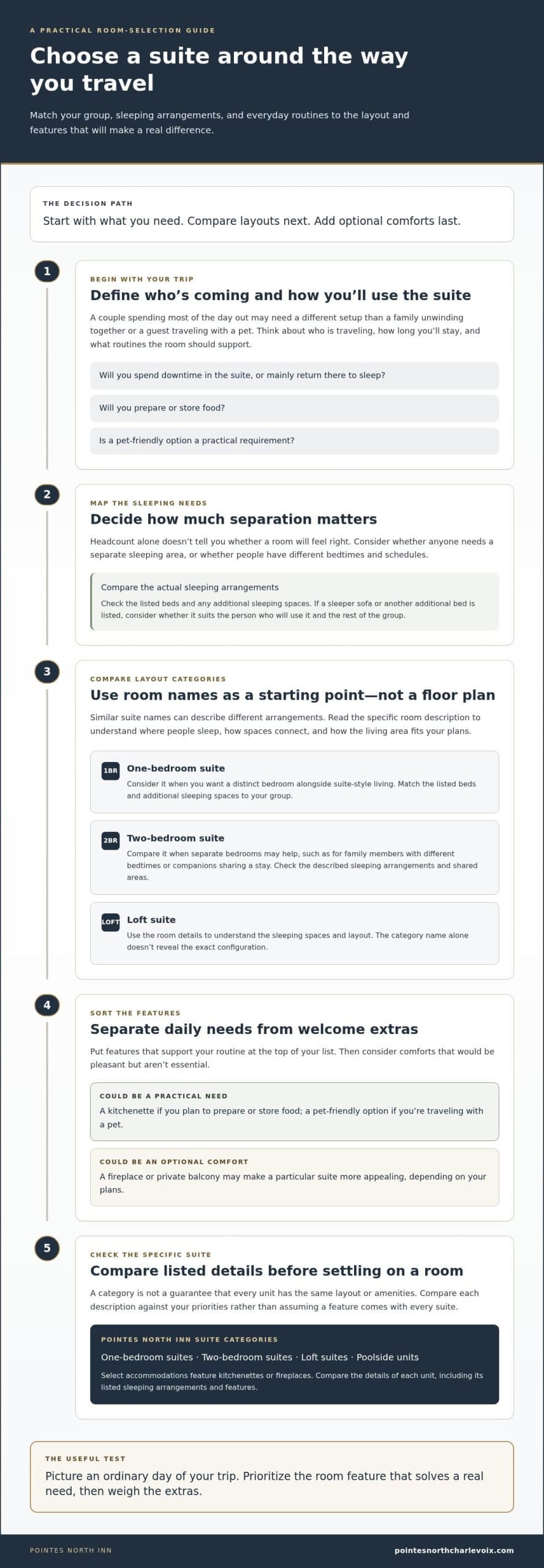
Picture an ordinary day of your trip, from waking up to winding down. Which room feature would solve a real need? Which one just sounds appealing? Prioritize daily usefulness, then consider optional comforts that would make the stay more relaxing. That needs-first approach is central to how to choose the best room at a suite hotel.
Compare Suite Layouts by Group Size, Privacy, and Sleeping Needs
A suite category is a starting point, not a guarantee of an identical floor plan at every property. Compare the stated sleeping arrangements and how the rooms connect, then consider whether the layout gives everyone enough privacy to rest comfortably. A separate bedroom can help when children and adults, or companions with different schedules, need to wind down at different times.
One-bedroom suite: Consider this category if you want suite-style living with a separate bedroom and shared space. Compare the listed beds and any additional sleeping arrangements with your group’s needs.
Two-bedroom suite: This may suit travelers who want separate bedrooms, such as family members with different bedtimes or companions sharing a stay. Check the sleeping arrangements and shared areas described for the specific suite.
Loft suite: Compare this category if the described layout suits your group. Don’t infer the floor plan from the word “loft” alone. Use the room details to understand where people sleep and how the space is arranged.
Think beyond headcount. A group may have enough beds but still prefer separate sleeping areas so one person can turn in while others continue their evening. If a room description lists a sleeper sofa or another additional bed, consider whether that arrangement will be comfortable for the person using it and practical for the rest of the group.
When does a one-bedroom suite fit the trip?
A one-bedroom suite is worth considering when you want a distinct sleeping area alongside suite-style living. It may suit a couple or a small group, depending on the specific beds and layout. Read the description and match each sleeping space to the person who will use it. For a closer look, explore the available one-bedroom suite options.
When should travelers compare two-bedroom or loft suites?
Compare two-bedroom options when privacy matters or group members keep different hours. A loft may also work for your plans, but the category name alone doesn’t reveal its exact configuration. Look for the number and type of sleeping spaces, whether bedrooms are separate, and how the living area fits into the layout. These details provide a clearer basis for comparison than room names alone.
Keep categories separate from individual features. “One-bedroom” describes a layout category; a fireplace or private balcony is a feature that may distinguish a particular suite. Pointes North Inn offers one-bedroom, two-bedroom, and loft suites, as well as options such as suites with a fireplace or private balcony. When deciding how to choose the best room at a suite hotel, compare the layout and sleeping details first, then weigh the features that would make your stay more comfortable.
Choose Suite Amenities That Match How You Travel
A feature belongs on your shortlist when it supports something you’ll actually do. Before comparing room descriptions, divide amenities into two groups: needs that affect your routine and extras that would make the stay more relaxing. A kitchenette might be essential if you plan to prepare or store food, while a fireplace may be a pleasant bonus for downtime.
Amenities can vary by unit. A property may offer suites with kitchenettes, fireplaces, private balconies, or poolside settings without every suite including every feature. Read each room description individually and match its details to your plans rather than assuming a feature comes with a particular suite category.
Is a kitchenette useful for your kind of stay?
A kitchenette may suit travelers who want the option to prepare simple meals or keep food in their suite. That flexibility can be useful during a longer stay or when your group prefers a quiet breakfast before heading out. If you expect to dine out for most meals, it may matter less than a layout or comfort feature you’ll use more often. Compare the suite descriptions with your meal routine.
Which comfort features are worth prioritizing?
A fireplace or private balcony can make downtime more enjoyable, but neither is a universal need. A poolside setting may matter more if using the property’s year-round heated pool is part of your plans. Travelers bringing a pet should make a pet-friendly condominium a priority. Choose features that support your trip, not just the ones that sound appealing in a room description.
- Kitchenette: Consider it if preparing or storing food would simplify your routine.
- Fireplace: Prioritize it if a cozy place to unwind matters to you.
- Private balcony: Look for this feature if you’d enjoy outdoor space connected to your suite.
- Poolside setting: Weigh it if pool access is an important part of your stay.
- Pet-friendly option: Treat it as a practical requirement when traveling with a pet.
For a clearer view of the property’s features, browse the suite hotel amenities and compare them with your must-have list. To choose a room that fits your plans, rank amenities by how often they’ll support your stay, then consider optional comforts once the essentials are covered.
Use a Room-Comparison Checklist Before You Book
A side-by-side comparison turns room descriptions into a practical decision. Follow the same sequence for each option: confirm your group’s needs, compare layouts and sleeping arrangements, rank the amenities, then consider whether the stay style suits your plans. Use details stated in each room description. If a feature isn’t described, mark it “not stated” rather than assuming it’s included.
What should you compare in each room description?
Build a small table and fill it in for every suite you’re considering. Use consistent criteria so one appealing detail doesn’t distract from a more important need.
| What to compare | Option A | Option B | Priority |
|---|---|---|---|
| Stated layout and sleeping arrangements | Record details | Record details | Essential, useful, or optional |
| Kitchenette or other food-related features | Record details | Record details | Essential, useful, or optional |
| Pet-friendly option | Record details | Record details | Essential, useful, or optional |
| Poolside setting or other listed features | Record details | Record details | Essential, useful, or optional |
Before filling in the table, decide what matters for this trip. Note who needs a bed and whether anyone needs a separate sleeping area. Add meal routines, pet needs, and plans to use the pool. Then label each criterion essential, useful, or optional. A kitchenette may be essential if you plan to prepare food but optional if you expect to eat out. A poolside setting matters most if pool time is part of your stay.
How does a suite hotel stay differ from a standard hotel stay?
Suite-style accommodation can offer more independence, with space and features suited to settling in and following your own routines. Pointes North Inn focuses on independent suite living rather than on-site dining services. If you’re comparing this kind of stay with a more traditional hotel setup, the condotel accommodation model offers helpful context.
Once your table is complete, look for the option that meets your essentials and gives appropriate weight to features you’ll use. To put this needs-first approach into practice, explore Pointes North Inn’s suite accommodations. Compare the details in each description, then choose the fit that supports your trip.
Find Your Best-Fit Suite at Pointes North Inn
Put your priorities to work by comparing Pointes North Inn’s one-bedroom, two-bedroom, loft, and poolside suite categories. The available options include accommodations with kitchenettes, fireplaces, private balconies, and pet-friendly condominiums. These features aren’t included in every suite, so compare the description of each room with the layout and essentials you’ve already identified.
Which Pointes North Inn suite category matches your priorities?
If you’re traveling with someone who would appreciate a separate bedroom, start by comparing one-bedroom options with your group’s sleeping needs. A two-bedroom suite may suit a group that values more separation or has different schedules. The right fit depends on the arrangements described for the individual suite, not just its name.
Loft suites offer another category to consider. Read the specific description to understand how the space is arranged and whether it suits your group. A poolside suite may appeal if easy access to pool time is part of your ideal stay. Pointes North Inn also has a year-round heated pool, a property amenity that guests can enjoy without assuming every suite is poolside.
Then match optional features to your routine. A kitchenette may be useful if you plan to prepare or store food. A fireplace or private balcony could add a welcome touch to downtime, while a pet-friendly condominium is a practical priority when traveling with a pet. Focus on the features that will shape your stay, and treat the rest as nice-to-haves.
What is the simplest next step toward choosing?
Keep your shortlist focused on three filters: layout, essential features, and travel routine. First, decide which suite category makes sense for your group. Next, identify the features you need, such as a kitchenette or pet-friendly option. Finally, consider how you’ll spend your time, including whether you expect to relax in the suite or use the pool.
This needs-first approach makes it easier to choose without getting sidetracked by a long list of extras. If you’re ready to compare the available categories, explore Pointes North Inn suite options and find a stay that fits the way you plan to travel. Choose the layout and features that make your time away comfortable and practical.
Choose a Suite That Makes Your Stay Feel Easier
The right room fits your group, sleeping arrangements, and travel routine, not simply your desire for more space or features. Compare the layout first, then prioritize amenities you’ll genuinely use. A kitchenette may support your meal plans, while a fireplace, private balcony, or pet-friendly option may suit a different kind of getaway. Check each suite description for its specific features before deciding.
At Pointes North Inn, one-bedroom, two-bedroom, loft, and poolside suite categories give you different starting points for comparison. Selected accommodations include kitchenettes, fireplaces, private balconies, or pet-friendly options, and the property has a year-round heated pool. Knowing how to choose the best room at a suite hotel means matching those possibilities to what will make your stay comfortable and practical.
Ready to find a fit for your plans? Explore Pointes North Inn suite options, compare the details, and choose a stay that gives you room to relax.
Frequently Asked Questions
How do I choose the best room at a suite hotel?
Choose a room that fits your group, sleeping needs, and daily routine. Start by noting who’s traveling and whether anyone needs a separate sleeping area. Then compare the stated layout, meal-related features, pet-friendly options, and comforts you’ll use. Mark each feature essential, useful, or optional. This helps you focus on practical fit instead of choosing a suite simply because it’s larger or has more amenities.
What is the difference between a hotel room and a suite?
A suite generally offers a more distinct living arrangement than a standard hotel room, often with separate sleeping and living areas. The exact layout varies, so the word “suite” alone doesn’t tell you how the space is arranged. Read the room description for details about bedrooms, shared areas, and sleeping arrangements. Those specifics help you decide whether the suite offers the privacy and room to relax your group wants.
Is a one-bedroom suite enough for a family?
A one-bedroom suite may work for a family if its stated sleeping arrangements suit everyone traveling. Consider who will use the bedroom, whether anyone will sleep in a shared living area, and whether different bedtimes could affect comfort or privacy. Families who want separate bedrooms may prefer comparing two-bedroom options. Room descriptions vary, so use the listed beds and layout rather than assuming every one-bedroom suite has the same setup.
Are suite hotel amenities included in every room?
No. Amenities can vary from one unit to another, even within the same property. A hotel may offer options such as kitchenettes, fireplaces, private balconies, pet-friendly units, or poolside suites without every room having each feature. Read the individual suite description and note which features it specifically lists. Don’t treat a property-wide amenity, such as a pool, as a feature inside every suite.
Is a kitchenette worth choosing in a suite?
A kitchenette may be worthwhile if you plan to prepare simple meals or keep food in your suite. It can support a routine built around eating in, while travelers who expect to dine out may get more value from a layout or comfort feature they’ll use more often. Think through a typical day of your stay, then decide whether food-related conveniences in the suite would make that routine easier.
What should I compare before booking a suite?
Compare the stated layout, sleeping arrangements, and features for each suite you’re considering. Make a side-by-side table and mark each item essential, useful, or optional for your trip. Include meal routines, pet needs, and plans to use the pool. Base your comparison on the details in each room description, and mark anything unstated as unknown rather than assuming it comes with the suite.
What does a condotel stay mean for guests?
A condotel combines condominium-style accommodations with hotel-style rental management. At Pointes North Inn, individual owners place their units into a professionally managed rental pool, while guests stay in independent suite-style accommodations. The property offers a range of suite categories and a year-round heated pool. Choose based on the specific unit’s described layout and features, since accommodation details can vary.