
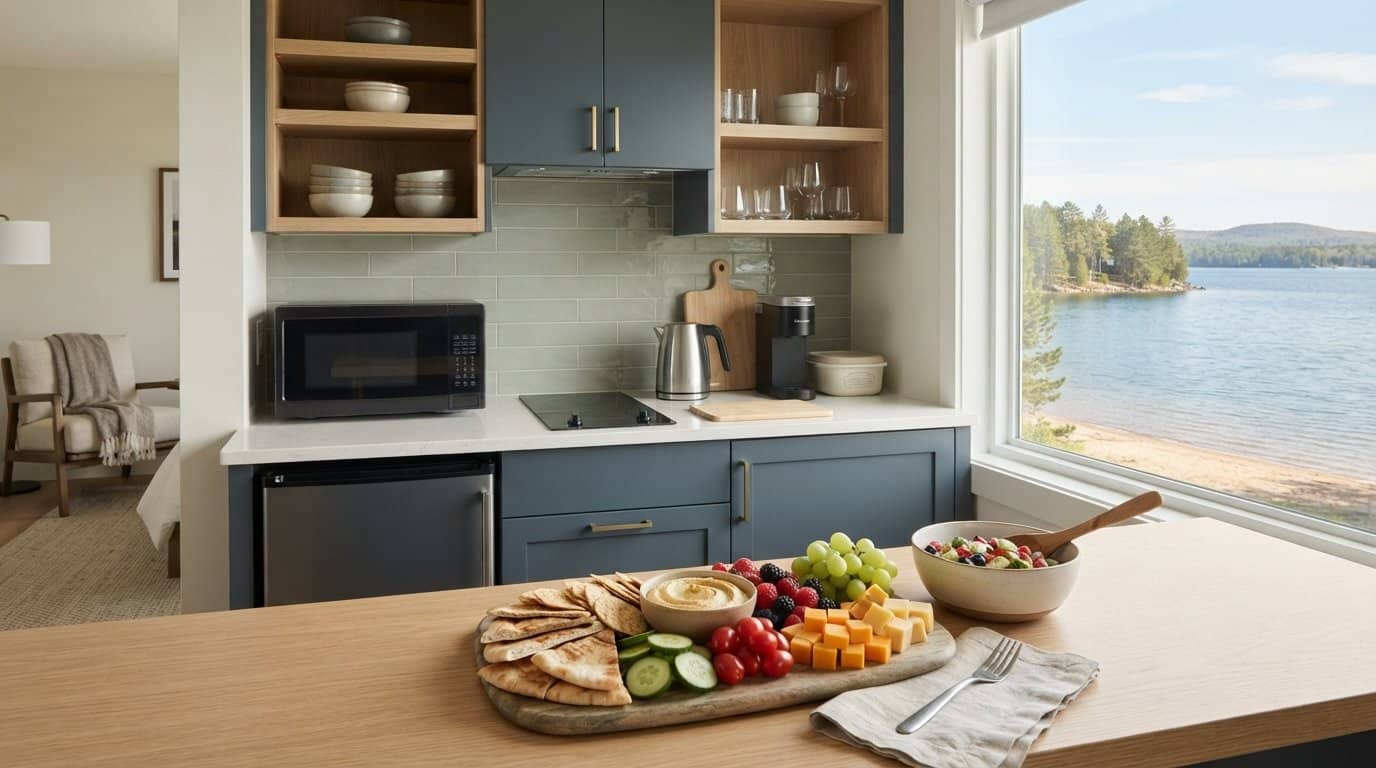
You don’t need a full kitchen to eat comfortably while traveling. Making the most of a hotel kitchenette comes down to choosing simple meals, buying only ingredients you’ll use, and matching each dish to the appliances available. Keep preparation straightforward, and cleanup can be just as easy.
It’s understandable to want a break from restaurant meals without turning your stay into a cooking project. With a little planning, you can put together no-cook snack dinners, make satisfying meals with a microwave or stovetop, and use nearby shops to find fresh, practical ingredients. These ideas for easy meals, compact appliances, and simple cleanup can make mealtimes part of a relaxed getaway rather than another chore.
Key Takeaways
- Build a no-cook snack dinner from a few ready-to-eat ingredients for an easy meal without extra cooking.
- Plan meals before visiting a local market so you can buy what you’ll use during your stay.
- Use a coffee maker or electric kettle creatively for simple food preparation, while keeping appliance use practical and straightforward.
- Choose one-bowl recipes and microwave-safe containers to simplify cooking and reduce the dishes left afterward.
- Preparing some meals in your room can make travel days more flexible and give you a comfortable option between outings.
1. Putting together a no-cook snack dinner
Easy hotel kitchenette meals include a no-cook snack dinner, a tuna wrap, or a simple microwave meal. For a no-cook plate, combine crackers or bread with cheese, hummus, sliced vegetables, and fruit. You’ll have variety without needing a stove, cookware, or lengthy preparation.
Start with a filling base, such as pita, crackers, or prepared salad. Add protein with cheese, hummus, or ready-to-eat beans, then include crisp vegetables and fruit. For example, pair pita with hummus, cucumber, cherry tomatoes, and an apple. Keep ingredients separate until serving to preserve crunch and adjust portions easily.
A rice-cooker demonstration shows how a compact appliance can prepare comforting food in a hotel room.
For a more substantial spread, assemble a snack board on a plate or clean counter. Choose contrasting textures, such as soft cheese, crunchy crackers, juicy grapes, and sliced peppers. A small travel spice jar can hold several seasonings, giving you options such as flavoring plain hummus or sprinkling herbs over tomatoes.
- Pair crackers, cheese, grapes, and cucumber for a balanced snack plate.
- Fill a tortilla with canned tuna, chopped vegetables, and a spoonful of dressing for a no-cook wrap.
- Combine bread, sliced cheese, and tomato with fruit for a simple sandwich dinner.
If you want warm food without a full cooking session, a microwave can handle small meals. A ham and cheese melt heats for 1-2 minutes, while a tuna and vegetable wrap warms for 30-45 seconds. Follow the recipe’s timing and use a microwave-safe plate. These options add warmth without requiring stovetop cooking.
Keep the setup simple: use one plate, one knife, and a napkin or cutting board for preparation. Wash produce before slicing, and leave fish dishes off the menu if lingering food smells would bother you; cooking fish in a hotel room can leave a lingering smell. With a few ready-to-eat ingredients, making the most of a hotel kitchenette can mean assembling dinner, not turning the evening into a cooking project.
2. Shopping at local markets for meal ingredients
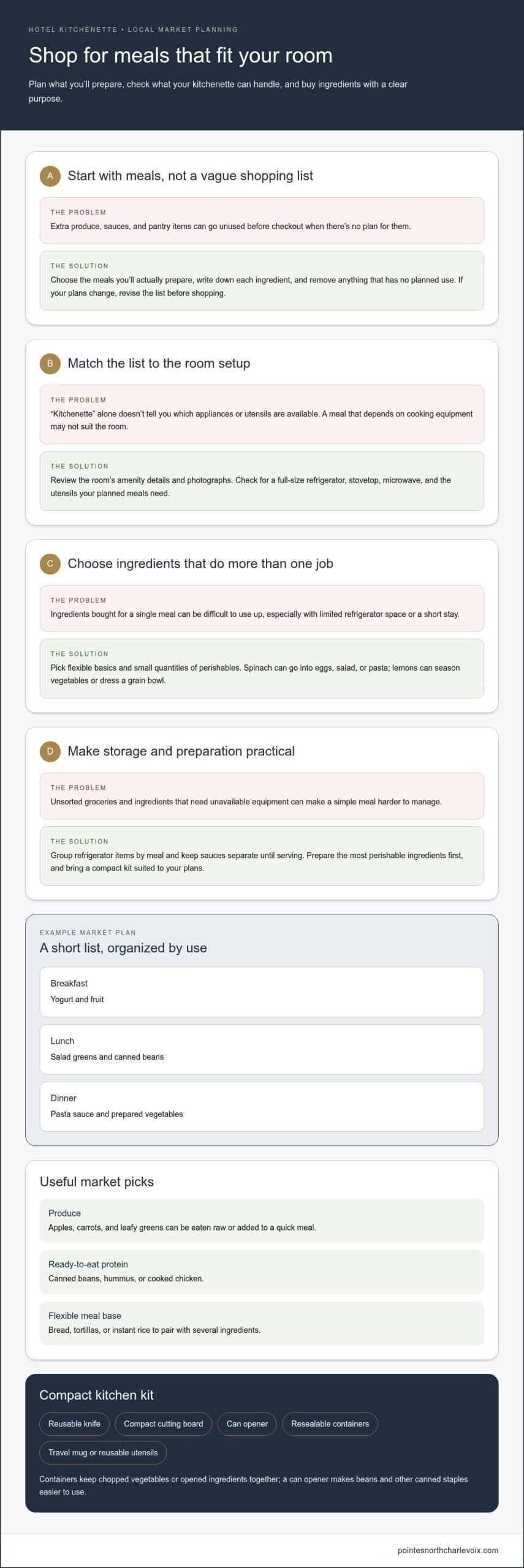
A local market can make kitchenette meals feel connected to your destination. Before shopping, plan the meals you’ll actually prepare and list their ingredients. This helps you avoid buying extra produce, sauces, or pantry items that may go unused before checkout.
To find out whether a hotel kitchenette has a full-size refrigerator, stovetop, or microwave, review the room’s amenity details and photographs. Look for each appliance by name, since “kitchenette” alone doesn’t describe the exact setup.
Start with your meal plan, then build a short shopping list by use. For example, choose yogurt and fruit for breakfast, salad greens and canned beans for lunch, and pasta sauce with prepared vegetables for dinner. Ingredients that work across meals keep the list practical: spinach can go into eggs, salad, or pasta, while lemons can season vegetables or dress a grain bowl.
- Choose produce that can be eaten raw or added to a quick meal, such as apples, carrots, and leafy greens.
- Look for ready-to-eat proteins, including canned beans, hummus, or cooked chicken.
- Pick a flexible base, such as bread, tortillas, or instant rice, to pair with several ingredients.
- Buy small quantities of perishables when you have limited refrigerator space or a short stay.
Use the hotel refrigerator as a meal-prep station, not just a place to store drinks. Group ingredients by meal, keeping breakfast items together and lunch components easy to find. Wash and dry produce before storing it if you have a clean place to prepare it. Keep dressings and sauces separate until serving so greens and bread don’t turn soggy.
Pack a small kitchen kit with a reusable knife, compact cutting board, can opener, and a few resealable containers. Add a travel mug or reusable utensils if they suit your plans. Containers keep chopped vegetables or opened ingredients together, while a can opener makes beans and other canned staples easier to use.
At the market, consider how each ingredient fits your room setup. A bag of salad and prepared protein need only refrigeration, while a meal built around pasta depends on suitable cooking equipment. Match purchases to the appliances in your room, then prepare the most perishable ingredients first. This keeps your meal plan realistic and helps you enjoy local flavors without leaving groceries unused.
Before heading to the market, connect each planned meal to a recipe and the days you expect to be away. Check every ingredient against the meals it will serve, then remove anything without a planned use. Planning ahead helps you buy only what you need. If your stay or meal plans change, revise the list before shopping instead of relying on a vague idea of what might be useful. A focused list keeps purchases tied to the recipes you intend to make and the time you have.
3. Using coffee makers and electric kettles for food preparation
A hotel kitchenette may include a microwave, refrigerator, stovetop, coffee maker, or electric kettle, along with basic cookware. The exact setup varies, so match each recipe to the appliances and utensils in your room.
Use an electric kettle to heat water for foods designed for hot-water preparation. A coffee maker is best used as intended for brewing coffee; avoid putting ingredients in its filter basket or carafe. This keeps food preparation simple and prevents coffee flavors from affecting your meal.
For overnight oats, combine 1/2 cup of oats or quinoa with a teaspoon of chia seeds in a lidded container. Add the liquid specified by your recipe, then stir in unsweetened coconut, chopped fruit, and nuts. Cover the mixture and refrigerate it overnight. In the morning, the prepared container can go straight to the table.
If you prefer a warm breakfast, make a separate bowl of instant oats with kettle-heated water, following the package directions. Stir well and let the oats absorb the water before adding toppings such as dried fruit or nuts. Keep the kettle on a stable surface, pour carefully, and use a heat-safe bowl rather than a disposable container.
Mac and cheese can work in a kitchenette when you choose a product suited to the appliances available. For a microwave-ready cup, follow the package directions and stir thoroughly before eating. If the instructions call for hot water, use the kettle and a heat-safe bowl. Don’t assume every pasta product can be prepared with kettle water alone; some require a stovetop or microwave.
Keep the coffee maker out of the cooking process. Use it for coffee, then prepare food separately with the kettle, microwave, or stovetop in your room. A clean mug can hold hot water for packaged soup or a drink when the directions allow, and a spoon makes mixing easier.
- Choose kettle-friendly foods, such as instant oats or a hot-water-preparation cup.
- Use a lidded container for overnight oats, then refrigerate it overnight.
- Follow package directions for mac and cheese, especially when they specify an appliance.
- Keep hot water away from the edge of the counter and pour it into heat-safe dishes.
These small-appliance meals work best when you plan around the equipment in your room. A kettle can provide hot water, while microwave-ready mac and cheese needs a microwave. Making the most of a hotel kitchenette means choosing recipes that suit the tools at hand instead of asking one appliance to do everything.
4. Benefits of cooking in a hotel room
Cooking in your room lets you choose meal timing, portions, and ingredients. A simple breakfast before a morning outing or a warm dinner after exploring can fit your schedule.
Cooking restrictions depend on the property’s posted guidance and the appliances provided. Follow those instructions, and consider avoiding fish because cooking it in a hotel room can leave a lingering smell.
Preparing meals yourself also gives you direct control over ingredients. For example, you can make a vegetable-heavy dinner, leave out a seasoning you dislike, or serve components separately for different preferences. A sheet-pan meal can suit a kitchenette with an appropriate oven: roast chicken thighs with vegetables at 400 F for 30 to 40 minutes, turning the chicken and vegetables once or twice. Skin-on thighs add flavor and help keep the meat moist.
That kind of meal can be useful when a group wants an easy dinner without coordinating separate orders. Put vegetables and chicken on a quarter sheet pan, then serve the meal straight from the pan. It’s a practical way to use a compact cooking setup while keeping preparation focused on one dish.
A kitchenette can also make a flexible travel day easier. If plans shift, prepared food or simple ingredients offer another option without requiring a reservation or fixed dining schedule. Keep a few meals in mind, then choose what suits the day’s activities and the room’s equipment.
- Prepare a familiar breakfast before setting out for the day.
- Choose a one-pan dinner when the room has a suitable oven and pan.
- Adjust portions and seasonings to suit the people sharing the meal.
- Plan a flexible meal for a day when activities may run late.
Cooking can also make a stay feel more personal. Use locally purchased ingredients to bring a taste of the destination to a relaxed meal, or prepare a favorite dish that feels comforting after a busy day. Keep the menu realistic for the equipment available, and let one well-chosen meal do the work rather than turning every evening into a cooking project.
Making the most of a hotel kitchenette means treating it as a useful part of your travel routine, not a substitute for a full home kitchen. A simple dinner, easy breakfast, or meal timed around the day’s plans can add comfort and flexibility to your stay.
5. Easy cleanup with microwave-safe containers and one-bowl recipes
One-bowl meals keep kitchenette cooking manageable because preparation, heating, and serving happen in the same dish. Choose a microwave-safe container, check its label, and use a loose-fitting cover to limit splatters. Keep a separate plate nearby for utensils or ingredients to add after heating.
Before cooking, clear the counter and wipe the surface with a clean, damp cloth. Set out only the ingredients and tools you need, such as one bowl, a spoon, and a microwave-safe lid. This quick setup provides a clean workspace and makes spills easier to spot.
For a simple beef and rice bowl, cook instant rice in beef broth for 4-5 minutes in a microwave-safe bowl. In a separate microwave-safe dish, heat beef and seasonings on medium for 1-2 minutes. Combine the rice and beef in one serving bowl. Add vegetables or a sauce after heating, using ingredients that suit your meal.
A chicken and mashed potato bowl also limits dishes. Heat the chicken and corn for 1-2 minutes, then prepare the instant mashed potato mixture according to its package directions. Let the mixture sit for 1-2 minutes to thicken. Microwave the gravy for 30 seconds, pour it over the bowl, and serve.
After eating, scrape food scraps into the trash before rinsing the bowl and spoon. Wash dishes with dish soap and warm water, then wipe the sink and counter. Clean microwave splatters promptly with a damp cloth, and dry surfaces so crumbs and drops don’t linger. Keep used towels separate from clean utensils.
- Use one microwave-safe bowl for cooking and serving wherever the recipe allows.
- Cover food loosely to contain splashes, then uncover carefully after heating.
- Wipe spills as soon as the microwave or counter cools enough to clean comfortably.
- Wash the bowl and spoon soon after the meal, before dried sauce becomes harder to remove.
These small steps make cleanup part of the meal rather than a separate chore. A single bowl, spoon, and quick counter wipe can leave the kitchenette ready for breakfast or the next day’s plans. For a stay with kitchen amenities, explore the available room amenities as you plan what to prepare.
One-pot or sheet-pan meals can reduce cleanup when cooking in a suite with a kitchenette. Favor recipes that keep preparation and serving contained, and check that cookware suits the cooking method before starting. Keep ingredients near the work area, and put packages and tools away as you finish with them. Clear counters make spills easier to spot and wipe.
For recipes that need more than one dish, set aside a clear spot for used utensils and wipe spills as they occur. Keep cleanup simple: remove scraps, wash cookware and tools, and leave the sink and counter clean and dry. Choosing a meal that fits the available dishes and workspace makes cooking more manageable, while a quick reset leaves the kitchenette ready for what comes next.
Pointes North Inn: One Bedroom Suite
Pointes North Inn offers condominium-suite accommodations for travelers who want a comfortable base between meals and outings. If preparing food in your room is a priority, the King Suite with Kitchenette suits the practical tips in this guide. The One Bedroom Suite offers another option, while the Two Bedroom Suite and Pet Friendly Condominium can suit different travel needs.
Choose the accommodation that best fits how you plan to spend your stay. A kitchenette can make simple breakfasts and easy meals part of a more relaxed travel routine, without requiring elaborate cooking.
Visit pointesnorthcharlevoix.com to explore the suite options and find a comfortable fit for your getaway.
Make Your Next Stay Feel More Like Yours
Let your travel routine reflect what helps you feel settled. A comfortable place to prepare a simple meal can make downtime more inviting, especially when you’re balancing outings with a quieter evening in. Making the most of a hotel kitchenette starts with choosing a stay that suits how you want to travel.
Pointes North Inn offers a One Bedroom Suite, a Two Bedroom Suite, and a King Suite with Kitchenette. The King Suite with Kitchenette is a natural fit when preparing easy meals in your room is part of your plans; the other suites offer different accommodation options for your getaway.
Give yourself room to unwind and enjoy your destination at your own pace. Explore Pointes North Inn and plan your stay. A relaxed getaway can begin with the comforts that feel right for you.
Frequently Asked Questions
What groceries and pantry staples are most useful for a hotel kitchenette?
Choose groceries that fit your planned meals, available storage, and cooking equipment. Shelf-stable milk, nut butter, tea, nuts, dried fruit, and single-use seasoning packets can be useful without taking much refrigerator space. Add fresh items that work in more than one dish, such as oranges or avocados. Before shopping, check what you already have, then buy amounts you can finish during your stay.
How can you safely store and prepare food in a hotel room kitchenette?
Keep refrigerated groceries in sealed containers and separate raw ingredients from ready-to-eat foods. Wash your hands, rinse produce, and use a clean surface and utensils for preparation. Follow package directions for heating meals, and use microwave-safe dishes in the microwave. Refrigerate leftovers rather than leaving them on the counter, and discard food that looks or smells spoiled.
How much money can you save by cooking in a hotel kitchenette instead of eating out?
There’s no fixed saving amount: it depends on which meals you replace, grocery prices, portion sizes, and whether ingredients go unused. Compare the grocery cost of a planned meal with the cost of a similar restaurant meal for the same group. Include ingredients you can use again during your stay, and avoid buying large packages for a single dish.
Where can you buy groceries near a hotel, and what delivery options are available?
Depending on the destination, groceries may be available at supermarkets, local markets, farmers markets, or convenience stores. Grocery stores and delivery apps may offer delivery or pickup in some areas, while nearby markets can be practical for small amounts. Choose based on your meal plan: a market visit suits fresh ingredients, while delivery can help with heavier items or a larger grocery list.


