Why do so many hopeful collectors spend hours scouring the sand only to leave with a bucket of ordinary, dry limestone? It’s a common frustration to realize your treasure lost its luster the moment it left the water. You’ve traveled to Northern Michigan for a reward, not a chore. If you’re wondering where to find petoskey stones in charlevoix, you aren’t just looking for a map; you’re looking for the local secrets that turn a walk on the beach into a successful fossil hunt.
We understand that your time is precious and your vacation should feel like a true act of self-kindness. In this 2026 guide, you’ll discover the most productive shorelines and the expert techniques needed to identify these 350-million-year-old coral fossils. We will cover the 25-pound annual legal limit for state lands and explain how to use a suite with a kitchenette to properly clean and inspect your finds. From the windswept dunes of Fisherman’s Island to the cozy glow of a fireplace after a day on the coast, we’ll help you plan the ultimate rockhounding retreat.
Key Takeaways
- Learn to distinguish the unique sunburst pattern of Hexagonaria percarinata from ordinary limestone using simple identification tricks.
- Discover exactly where to find petoskey stones in charlevoix by targeting the public beaches and Lake Michigan shorelines most affected by the annual ice push.
- Master the timing of your visit by planning for early spring 2026 when winter ice has freshly churned the lakebed to reveal hidden treasures.
- Stay within the legal 25-pound annual collection limit while using expert tools like a simple spray bottle to spot patterns on dry rocks.
- Enhance your rockhounding experience by choosing a suite with a kitchenette, providing the perfect space to wash and admire your fossilized finds in comfort.
Understanding the Michigan State Stone: Petoskey vs Charlevoix
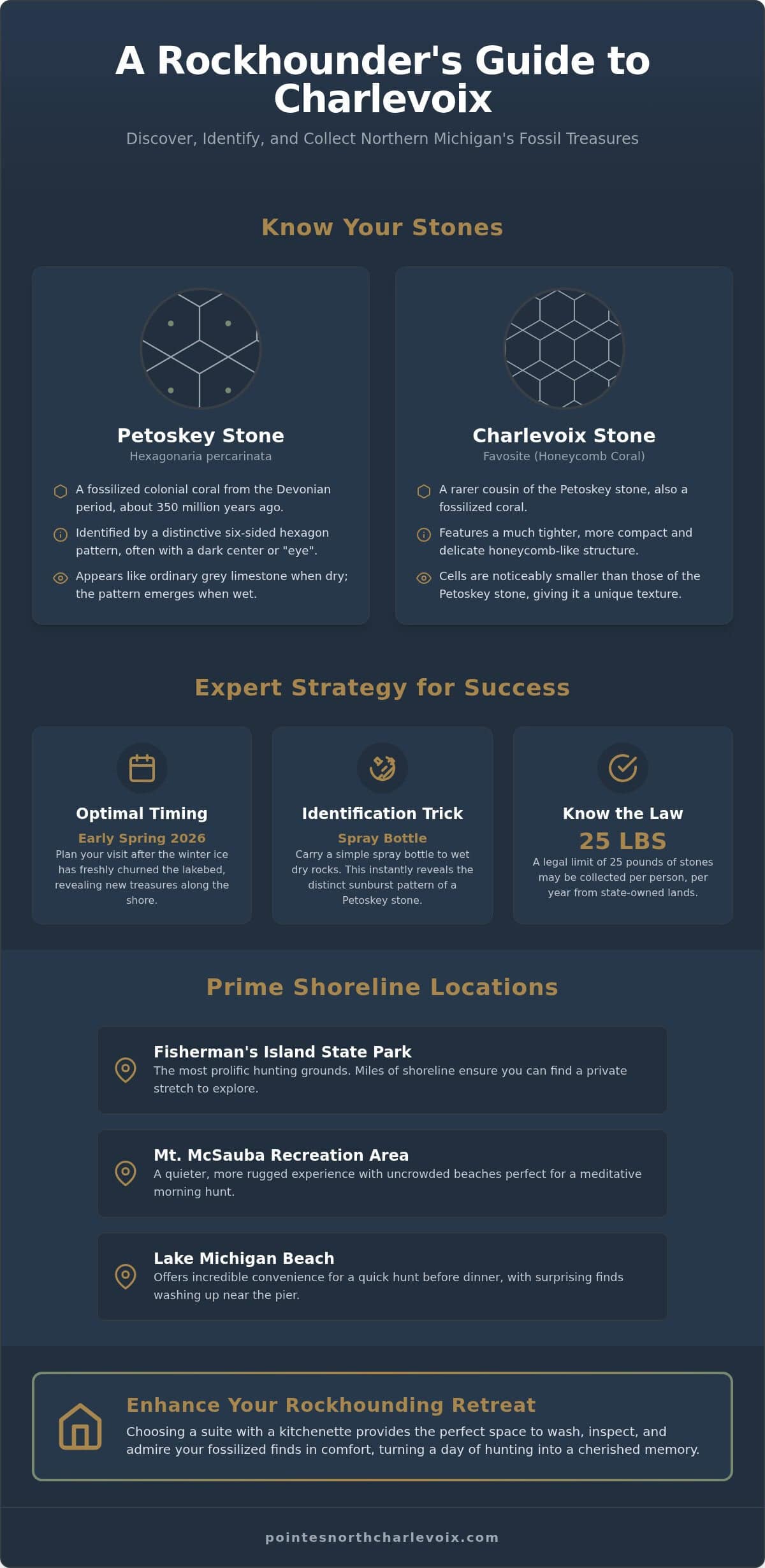
Walking along the Lake Michigan shoreline, you might feel like you’re searching for a needle in a haystack. Why settle for a bucket of ordinary grey rocks when you could bring home a piece of ancient history? To master the art of rockhounding, you first need to understand the science behind the prize. The Petoskey stone is actually a fossilized colonial coral known as Hexagonaria percarinata. These treasures date back to the Devonian period, roughly 350 million years ago, when Michigan was covered by a warm, shallow sea. They are found within the Traverse Group rock strata, a geological formation that occasionally pushes these fossils to the surface for lucky travelers to find.
While the Petoskey is the state stone, our area offers a second, rarer prize: the Charlevoix stone. This is a smaller-celled cousin known as a Favosite, or honeycomb coral. While both are fossils, the Charlevoix stone features a much tighter, more delicate pattern. Knowing the difference is the first step in learning where to find petoskey stones in charlevoix and building a collection that truly represents the region’s unique geology. Many visitors ask where to find petoskey stones in charlevoix only to realize they’ve been stepping over these ancient wonders all along because they didn’t know what to look for.
Identifying a Petoskey Stone in the Wild
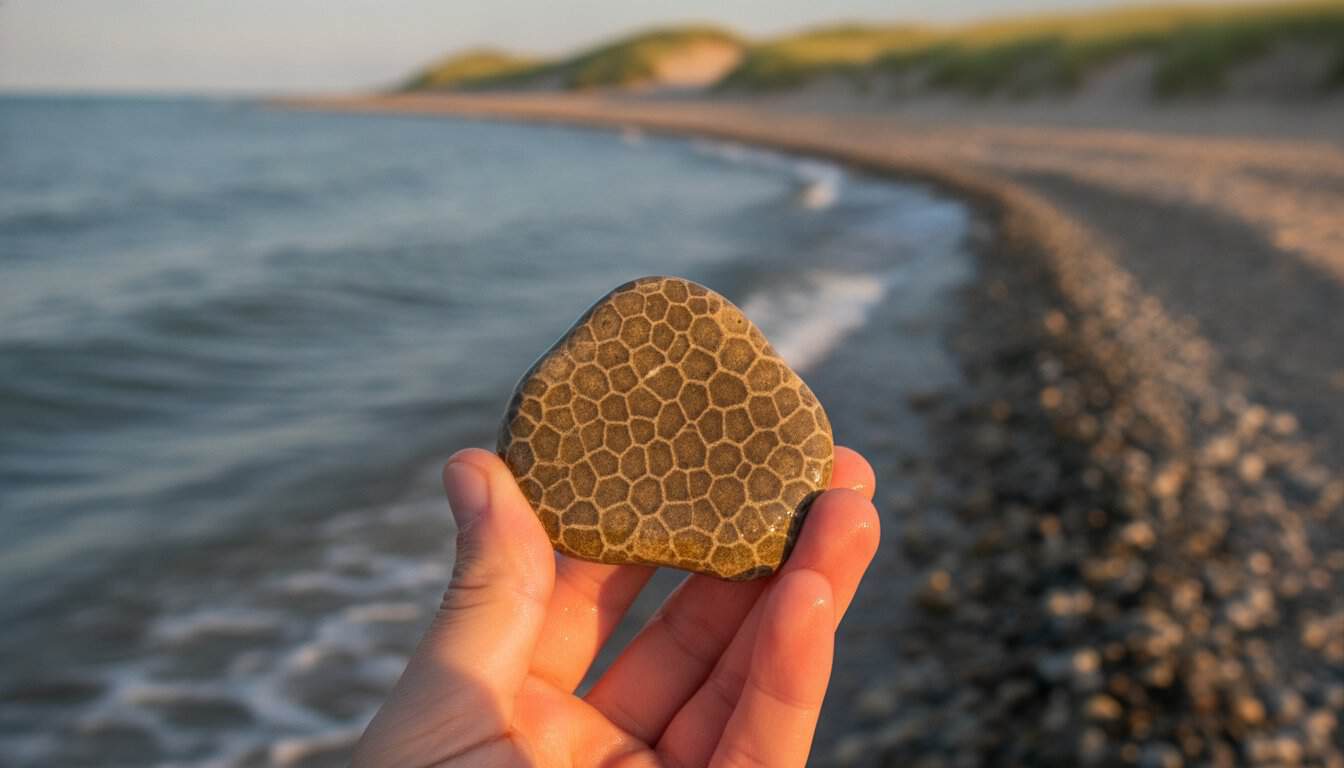
The biggest challenge for a beginner is looking past the dull exterior of common limestone. When dry, a Petoskey stone looks like any other dusty rock on the beach. You should look for the distinctive six-sided hexagon pattern that reveals itself the moment the stone is wet. Each “eye” in the pattern represents a single coral polyp. You’ll notice a dark center, which was once the mouth of the living organism. If you aren’t sure, dip the stone in the lake or use a spray bottle to see if the sunburst pattern emerges from the grey background.
The Unique Features of the Charlevoix Stone
The Charlevoix stone is often mistaken for its more famous cousin, but its exoskeleton is much more compact. Instead of large, sprawling hexagons, you’ll see a tiny, honeycomb-like structure. These stones often have a lighter or even white set of small rays radiating from the center of each cell. Finding both a Petoskey and a Charlevoix stone on the same afternoon is a true Northern Michigan bucket list item. After a successful day of hunting, you can bring your finds back to your King Suite with Kitchenette to give them a gentle scrub and admire the intricate details under better light. It’s the perfect way to wrap up one of your favorite summer activities before relaxing by the fireplace.
Prime Shoreline Locations for Finding Petoskey Stones in Charlevoix
Knowing where to find petoskey stones in charlevoix is about more than just picking a random spot on a map. The Lake Michigan shoreline serves as your primary hunting ground, offering a diverse landscape of sandy flats and rocky embankments. While the downtown area is convenient, moving away from the most crowded stretches often leads to larger, more pristine specimens. To truly appreciate the geology of the Petoskey stone, you need to see them in their natural habitat where the waves do the hard work of tumbling them for you.
Mt. McSauba Recreation Area
This area is a local favorite for those seeking a quieter, more rugged experience. The dunes here offer a sense of seclusion that is hard to find elsewhere. You can follow the winding walking trails from the parking area down to the water, where the uncrowded beaches provide plenty of room to roam. Focus your search near the water line. The waves constantly turn the stones, revealing fresh patterns that haven’t been picked over by earlier visitors. It’s a meditative way to spend a morning, surrounded by the natural beauty of the coast.
Fisherman’s Island State Park
If you’re looking for the most prolific hunting grounds in the region, this park is a mandatory stop. With miles of accessible shoreline, it’s easy to spend a full day lost in the rhythm of the lake. In 2026, entry requires a Michigan Recreation Passport, which costs about $15 to $20 for residents or $12 for a daily out-of-state pass. Remember that state law allows you to collect up to 25 pounds of stones per year. This vast space ensures you can find your own private stretch of beach to explore without feeling rushed.
Lake Michigan Beach and Beyond
For those times when you want a quick hunt before dinner, the downtown beach offers incredible convenience. You might be surprised at what washes up near the pier and breakwalls after a storm. If you prefer a more serene atmosphere, a short drive to the Antrim Creek Nature Preserve offers a peaceful alternative. After a rewarding day on the windy shoreline, returning to one of our boutique suites is the perfect way to practice self-care. You can relax by the fireplace and plan your next adventure using our local guide to summer activities.
The Best Times and Conditions for Rockhounding Success
Timing is the secret ingredient that separates a casual stroller from a successful rockhound. While knowing the specific beaches is helpful, understanding the environmental cycles of Lake Michigan is what truly reveals where to find petoskey stones in charlevoix in abundance. The lake is a living system, constantly shifting its treasures based on the temperature and the wind. If you want to maximize your chances of a significant find, you must align your visit with the natural movements of the water.
The Science of the Spring Hunt
Early spring is the gold standard for rockhounding in Northern Michigan. During the winter months, massive sheets of lake ice act like giant, slow-moving scrapers across the lakebed. This ice push phenomenon churns the floor of the lake, pulling deep-seated fossils from the bottom and depositing them directly onto the shoreline. As the shore ice melts in 2026, you’ll find a fresh crop of treasures that haven’t been touched since the previous year. The crisp, fresh air of a Northern Michigan spring provides a rejuvenating backdrop for your search, making it the perfect season for a restorative retreat. Visiting during this window ensures you are among the first to scan the newly deposited gravel bars.
Hunting After the Storm
If you can’t make it in the spring, your next best bet is to head to the water immediately following a significant Lake Michigan storm. High winds and heavy waves act as a natural sieve, churning up the rocky bottom and tossing new finds onto the sand. Safety is paramount; always wait until the heavy weather has passed before walking the shoreline, as slippery rocks and receding surges can be unpredictable. These storms do the heavy lifting for you, bringing fossils to the surface that were previously buried under layers of sand.
There are two visual advantages to keep in mind when planning your daily outing:
- Wet Visibility: Stones are easiest to identify while they are still wet from the surf. The lake’s spray acts as a natural polish, revealing the sunburst patterns that disappear when the stone is dry.
- Overcast Skies: Experienced collectors often prefer hunting on cloudy days. An overcast sky reduces the harsh glare on the water’s surface, allowing you to peek through the ripples and spot fossils hiding just inches offshore.
After a day of braving the elements, there’s no better reward than returning to a boutique suite. You can warm up by the fireplace in your Queen Suite with Fireplace or take a dip in our year-round heated pool, reflecting on the day’s discoveries. It’s an act of self-kindness to pair a rugged day on the coast with the high-end comfort of a downtown retreat. Check our amenities to see how we make your rockhounding basecamp as comfortable as possible.
Expert Techniques: How to Identify and Clean Your Finds
Success on the shoreline requires the right preparation. Before you head out, ensure you’re wearing sturdy water shoes or boots, as the rocky embankments of Lake Michigan can be notoriously slippery. It’s also vital to respect the local environment; the Michigan Department of Natural Resources maintains a strict legal limit of 25 pounds of stones per person, per year on state and federal lands in 2026. Knowing exactly where to find petoskey stones in charlevoix is only half the battle; you must also know how to spot them among the millions of pebbles that line our coast.
Identification Tips for Beginners
Why do so many rocks look like fossils when they’re in the water, only to turn into plain grey limestone once they dry? This is the most common challenge for new rockhounds. To solve this, always carry a small spray bottle filled with lake water. A quick misting will reveal the hidden sunburst pattern of the Hexagonaria percarinata without the need for the traditional lick test. You can also use your fingertips to feel for the texture of the coral cells; real fossils often have a slightly different tactile quality than the surrounding stone. Look past the common grey rocks and keep an eye out for stones with a slightly brownish or translucent hue, as these often hide the most intricate patterns. Once you have identified where to find petoskey stones in charlevoix, you’ll want to ensure you’re only bringing home the best specimens to stay within your annual limit.
Cleaning and Preserving Your Treasures
After a rewarding day of exploration, the process of cleaning your finds should be a relaxing part of your evening routine. We recommend a gentle approach to preserve the delicate fossil structure. Use a soft-bristled brush and mild soap to remove any lingering sand or algae. A King Suite with Kitchenette provides the perfect, private space for this preliminary wash, allowing you to spread out your treasures and inspect them in comfort. For those who want a permanent shine, you can choose between the slow, meditative process of hand-polishing with fine-grit sandpaper or using a rock tumbler for a professional, high-gloss finish. Taking the time to care for these ancient treasures is a wonderful way to extend the joy of your Northern Michigan retreat. It’s an act of self-kindness to turn your hobby into a polished collection of memories.
Ready to start your collection? Book one of our boutique suites today and enjoy the perfect basecamp for your 2026 rockhounding adventure.
Planning Your Rockhounding Retreat in Charlevoix
A rockhounding trip shouldn’t just be a search; it should be a restorative experience. When you’re deciding where to find petoskey stones in charlevoix, consider that your basecamp is just as important as the beach you choose. Framing your 2026 adventure as an act of self-kindness allows you to slow down and truly enjoy the rhythm of the lake. By staying in a downtown suite with immediate beach access, you eliminate the stress of long commutes and maximize your time on the sand. This convenience turns a simple hobby into a true Northern Michigan retreat where the focus remains on your well-being and discovery.
The Benefit of Boutique Suite Living
Choosing the right lodging is a critical part of knowing where to find petoskey stones in charlevoix with ease. Our boutique suites are designed for the modern hobbyist who values both independence and luxury. A One Bedroom Suite offers the necessary space to spread out your daily treasures without feeling cramped. One of the most practical features for a rockhound is the kitchenette. It provides a dedicated area to soak and gently scrub your fossils, keeping the main living area tidy and organized. This independent lifestyle is a hallmark of our condotel model. You get the spaciousness of a condominium combined with the professional management and high standards of a boutique establishment. It’s a more substantial home base than any standard hotel could offer for those who want to feel at home while they explore. Learn more about the benefits of a condotel stay to see how we provide a better value for your 2026 vacation.
Cozy Evenings and Shoreline Sunsets
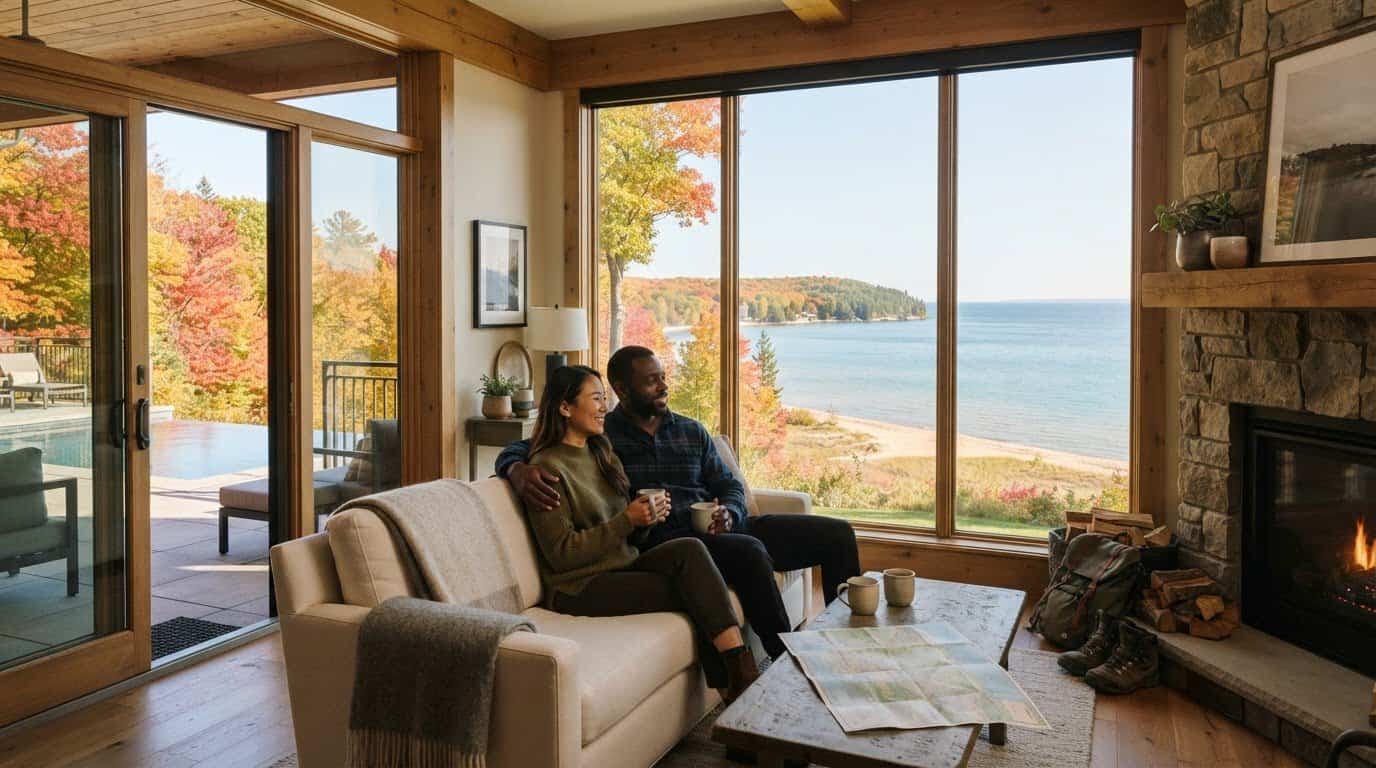
After a day spent on the windy shoreline, your body will crave warmth and relaxation. Returning to a Queen Suite with Fireplace is the ultimate reward for your efforts. You can settle in with a warm drink and listen to the crackle of the fire while you admire the sunburst patterns of your new finds. If you prefer to stay outdoors a little longer, use your private balcony to watch the sunset over the water. It’s a perfect time to reflect on your discoveries and plan the next morning’s route. For those who need to shake off the chill of the Lake Michigan breeze, our year-round heated pool offers a soothing escape. This combination of outdoor exploration and indoor indulgence is what makes a Charlevoix vacation so memorable. Explore our boutique suite amenities to find the perfect room for your next shoreline adventure.
Start Your 2026 Shoreline Discovery
Finding a piece of Michigan’s ancient history is a reward that stays with you long after the sand has been brushed from your shoes. By mastering the sunburst patterns of the Petoskey stone and understanding the geological secrets of the Charlevoix stone, you’ve already taken the first step toward a successful hunt. Whether you choose the rugged dunes of Mt. McSauba or the vast stretches of Fisherman’s Island, knowing exactly where to find petoskey stones in charlevoix ensures your time on the coast is both productive and peaceful.
True self-kindness means choosing a home base that supports your passion. Our spacious suites provide the perfect environment for a dedicated rockhound, featuring kitchenettes that make cleaning and inspecting your treasures a breeze. After a day exploring the beaches within walking distance of our front door, you can retreat to the warmth of a fireplace or take a relaxing dip in our heated pool. It’s time to upgrade your expectations for a Northern Michigan vacation. Book your 2026 rockhounding retreat at Pointes North Inn and turn your shoreline search into a luxurious escape. We can’t wait to see what treasures you discover on our shores.
Frequently Asked Questions
Where is the best place to find Petoskey stones in Charlevoix?
Mt. McSauba and Fisherman’s Island State Park are widely considered the most productive shorelines for travelers. These areas offer natural wave action and a peaceful environment away from the busiest stretches. For those staying in a downtown suite, the public beaches near the pier are surprisingly effective after a storm. This variety makes the region a premier national destination for anyone wondering where to find petoskey stones in charlevoix.
Do I need a permit to collect Petoskey stones in Michigan?
You do not need a specific rockhounding permit, but you do need a Michigan Recreation Passport to enter state parks like Fisherman’s Island. In 2026, these passports cost approximately $12 for a daily out-of-state vehicle pass or $15 to $20 for Michigan residents. While the act of collecting is free, adhering to these park entry requirements ensures the preservation of the trails and shorelines you enjoy during your retreat.
How can I tell the difference between a Petoskey stone and a Charlevoix stone?
The primary difference lies in the size and shape of the fossilized coral cells. Petoskey stones feature large, six-sided hexagons known as Hexagonaria percarinata, which resemble a sunburst. Charlevoix stones are Favosites, often called honeycomb corals, and have much smaller, tighter cell structures. While both are ancient fossils from the Devonian period, the Charlevoix stone is typically rarer. Finding both in a single afternoon is a major achievement for any dedicated collector.
What is the best time of year to hunt for fossils on Lake Michigan?
Early spring is the absolute best time for rockhounding success in Northern Michigan. As the winter ice melts in 2026, the ice push phenomenon scrapes the lake floor and deposits a fresh layer of fossils onto the shore. These stones haven’t been picked over by other travelers yet. If you can’t visit in the spring, the days immediately following a heavy Lake Michigan storm are your next best opportunity for a productive hunt.
Can you find Petoskey stones when the water is calm?
Yes, you can find stones when the water is calm, though it requires a different approach. On still days, the lack of waves makes it easier to peer through the surface and spot fossils hiding in the shallow water just offshore. Overcast skies are actually helpful during calm conditions because they reduce surface glare. This allows you to identify the sunburst patterns of the stones more clearly while they are naturally submerged and wet.
Are there any limits on how many stones I can take home?
Michigan law sets a strict limit of 25 pounds of stones per person, per year on all state-owned lands. This regulation is in place for 2026 to ensure that these natural treasures remain available for future generations to enjoy. If you are collecting on federal lands, such as National Forests, the limit is 10 pounds. It’s important to keep these weights in mind as you explore the various locations where to find petoskey stones in charlevoix.
What should I bring with me for a day of rockhounding?
A successful day on the shoreline starts with the right gear. We recommend wearing sturdy water shoes or boots to protect your feet from slippery, sharp rocks. Bring a small spray bottle filled with water to reveal the patterns on dry stones and a mesh bag for easy carrying. Don’t forget a light jacket for the windy coast. After your hunt, a suite with a kitchenette provides the perfect space to wash and organize your new collection.
Is it better to look for stones in the water or on the sand?
It is generally much easier to find fossils in the water or at the very edge of the surf. Petoskey stones are nearly impossible to identify when they are dry and dusty on the sand. The water acts as a natural polish that brings out the intricate honeycomb details. If you are searching the dry sand, use your spray bottle to mist promising grey rocks. This simple trick reveals the hidden beauty of the limestone.