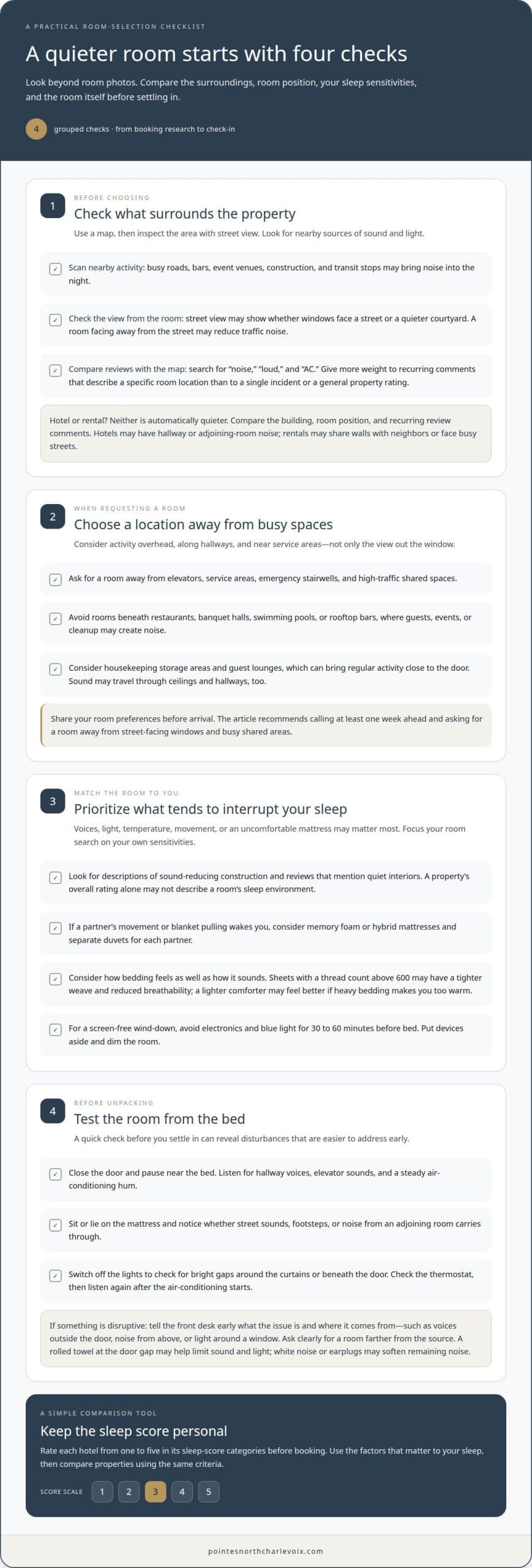
Finding quiet accommodation for light sleepers starts with looking beyond room photos. Check nearby roads, shared spaces, elevators, and service areas, then request a room away from likely noise sources. Look for recurring guest comments about noise, busy surroundings, or air-conditioning. Consider your own sensitivities too: voices, light, temperature, or a partner’s movement may be what most often disrupts your sleep.
A little planning can make a stay feel more restful. Use a map to assess the surroundings, share your room preferences before arrival, and check for noise, light, and temperature issues before unpacking. This guide explains how to evaluate a property’s setting, identify room features and locations that may suit you, and make a clear request for a quieter space.
Key Takeaways
- Use maps and street views to spot nearby roads, gathering places, and other potential sources of noise before choosing a room.
- Identify whether sound, light, temperature, or movement is most likely to interrupt your sleep, then prioritize rooms that address that need.
- Inspect the room for noise, light, and temperature concerns before unpacking, and raise any issue promptly if a change is needed.
- Include elevators, service areas, and emergency stairwells in your room-location request to reduce the chance of passing noise.
Using maps and street view to identify nearby noise
Start with a map, then use street view to inspect the area around a hotel or rental. Look for busy roads, bars, event venues, construction, and transit stops, all of which can bring noise into the night. Street view may show whether windows face a street or a quieter courtyard. A room facing away from the street may reduce traffic noise. These checks make finding quiet accommodation for light sleepers more practical, because you can compare the setting with your own sensitivities.
Maps reveal what is nearby; guest reviews can help identify noise inside. Search for “loud,” “noise,” and “AC,” then consider whether complaints describe a recurring issue or a single incident. Comments about thin walls, late-night conversations, or rumbling air-conditioning can offer clues about the sleep environment. Reviews are especially useful for finding quiet accommodation for light sleepers when they describe a particular room location rather than the property in general.
Are vacation rentals or hotels quieter for light sleepers? Neither is automatically quieter. Hotels may have hallway or adjoining-room noise, while rentals may share walls with neighbors or face busy streets. For travelers seeking an alternative to dense commercial strips, countryside destinations such as Bawaria Wellness Retreat show how scenic, nature-surrounded settings help eliminate typical urban sounds. Compare the building, room position, and recurring review comments rather than relying on accommodation type alone.
What are the best booking filters and review sites for finding quiet accommodation? Use location filters to look away from main roads and nightlife, then search guest reviews for “noise,” “loud,” and “AC.” Compare map views with guest comments before choosing, since no single filter captures every room’s surroundings. For travelers planning getaways where undisturbed tranquility is paramount, specialist agencies like Fiji Naturally can also help pinpoint hand-picked eco-retreats and boutique stays designed for deep rest away from crowded resort corridors.
How can you find hotels with quiet rooms and soundproofing? Look for descriptions that specifically mention soundproofing, then call with your preferences at least one week before arrival. Ask for a room away from street-facing windows and busy shared areas. At check-in, a rolled towel at the door gap may help limit sound and light. White noise or earplugs can soften remaining noise. In apartment buildings, late-night footsteps and voices through shared walls may disturb sleep, so read reviews for comments about neighbors and quiet hours.
What Are the Specific Needs of Light Sleepers?
Quiet features include separation from busy shared spaces, comfortable bedding, and fewer interruptions from light and sound. Prioritize what tends to wake you, whether that is voices, movement, an uncomfortable mattress, or bright screens before bed.
Choosing Rooms Away from Busy Areas
A room away from high-traffic spaces means less exposure to voices, footsteps, and activity overhead. Avoid rooms beneath restaurants, banquet halls, swimming pools, or rooftop bars, where cleanup, events, or guests may create noise. Housekeeping storage areas and guest lounges can also bring regular activity close to the door. Consider how sound may travel through ceilings and hallways, not just whether a room faces a busy street.
Identifying Quiet Accommodation Features
Quiet-room features are details that can limit common sleep disruptions or make them less noticeable. Look for descriptions of sound-reducing construction and reviews mentioning quiet interiors, rather than relying only on a property’s overall rating. A separate duvet for each partner can reduce blanket pulling, while memory foam or hybrid mattresses may help limit the feel of a partner’s movements. These details may matter if small sounds or shifts easily wake you.
Bedding affects comfort as well as noise. Sheets with a thread count above 600 may have a tighter weave and reduced breathability, so consider how the fabric feels alongside the mattress. If heavy bedding makes you too warm, a lighter comforter may feel more comfortable through the night. The right setup supports relaxation without forcing you to adapt to bedding that feels distracting.
Build a screen-free wind-down into your evening. Avoid electronics and blue light for 30 to 60 minutes before bed; a bright phone or television can keep your attention active when you’re ready to sleep. Put devices aside, dim the room, and give yourself a quieter transition before lights out. That simple change can support peaceful nights and a more settled waking routine.
Rate each hotel from one to five in its sleep-score categories before booking, and call at least a week before arrival to request a quieter room away from elevators and service areas.
Inspecting the room and requesting a change at check-in
Inspect the room before unpacking, while requesting a different room is still straightforward. Close the door, pause near the bed, and listen for hallway voices, elevator sounds, or a steady air-conditioning hum. Check whether curtains block outside light and whether the room feels comfortable for bedtime. A quick first look can reveal a disturbance that might otherwise interrupt the night.
Test the room from the place where you’ll sleep. Sit or lie on the mattress and notice whether street sounds, footsteps, or noise from an adjoining room carries through. Switch off the lights and check for bright gaps around the curtains or beneath the door. Check the thermostat and listen again after the air-conditioning starts; a sound that seems minor while standing may be more noticeable in a quiet room.
If something feels disruptive, speak with the front desk early. Be warm, friendly, and clear: describe the specific issue and its location, such as voices outside the door or noise from above. Then explain what would help, such as a room farther from the hallway or away from the source. A focused request gives staff a practical way to understand your concern.
Be specific instead of describing the room only as “too noisy.” Explain whether the disturbance is intermittent hallway traffic, continuous equipment noise, or light entering around the window. These details help staff understand whether a simple adjustment or a room change may help. Asking before unpacking also makes it easier to move your belongings and settle in again.
Once the room feels suitable, keep your bedtime routine consistent. Close the curtains, set a comfortable temperature, and put away bright screens before settling down. These small adjustments won’t remove every sound, but they can reduce avoidable light and distractions. A calm check-in and an early, precise request can help you assess the room before night arrives.
Asking for a room away from elevators and emergency stairwells
Room position can affect how much hallway activity reaches your bed. Ask for a location away from elevators, emergency stairwells, and service areas.
Choosing Room Locations Away from Shared Areas
A quieter room is usually farther from busy shared spaces and repeated foot traffic. Ask for a room away from elevators, where arriving guests, conversations, and elevator machinery can disturb sleep. Emergency stairwell doors may slam shut and disturb nearby rooms. A room farther along the hall may reduce exposure to these sounds.
Which room locations are quietest in a hotel? Request a room away from elevators, emergency stairwells, and service areas, preferably without a busy shared space directly outside. The best fit depends on the building layout and where activity travels.
Asking About Noise and Room Placement
Specific questions help staff understand what kind of quiet matters to you. Ask whether the room is near an elevator, stairwell, ice machine, or other equipment, and whether guests commonly pass its door at night. Explain whether voices, doors, or machinery are most likely to wake you or your partner.
What questions should you ask a hotel about noise and room placement? Ask for a room away from elevators and emergency stairwells, and ask whether nearby machines or shared spaces create nighttime noise. Share your preference before arrival so staff understand what matters to you.
Think about what interrupts your sleep most. If low mechanical sounds bother you, equipment may matter more than hallway traffic. If footsteps wake you, you may prefer a room at the end of a corridor. If temperature changes also disturb your sleep, ask where the room’s heating or cooling equipment is positioned. The goal is to find an environment where you can fall asleep and stay asleep with fewer interruptions.
Be friendly and direct when making your request. Naming the specific disturbance gives staff a clearer basis for considering room placement than asking only for “somewhere quiet.” A thoughtful location may support more restful sleep, although every property’s layout and nighttime activity differ.
Pointes North Inn
Pointes North Inn is a condominium-suite hotel with a range of suite accommodations for travelers considering comfort, space, and the needs of a restful stay. Options include One Bedroom Suites, Two Bedroom Suites, and a King Suite with Kitchenette, as well as a Pet Friendly Condominium. Consider which setup suits your travel party and bedtime routine, then use the room-location questions in this guide when planning your stay. A suite offers a comfortable place to unwind, while the surroundings and your personal sleep needs remain important factors in choosing accommodation.
If quiet room placement is a priority, share that preference as part of your lodging conversation. Contact Pointes North Inn to discuss your stay.
Make Rest Part of Your Travel Plans
Turn your sleep needs into a simple booking brief before your next trip. Decide which conditions matter most, such as a calm room for an early bedtime, space to unwind, or a layout that suits everyone traveling with you. Clear priorities make it easier to describe the kind of stay you hope to enjoy.
Finding quiet accommodation for light sleepers is a personal process. The most useful choice is one that fits your routines, not just a promise of quiet. Think about how you want the evening to feel, then use those priorities to guide your lodging decision. A thoughtful stay can make time away feel more restorative.
Take that preference into the conversation with Pointes North Inn as you plan your next getaway. Contact Pointes North Inn to discuss a stay that fits your plans. Choose with rest in mind, and look forward to a more settled visit.
Frequently Asked Questions
How can you check hotel noise levels before booking?
Compare guest comments across booking platforms and focus on specific descriptions, not just star ratings. Look for patterns tied to room location, such as street-facing windows or recurring late-night activity. If reviews are mixed, ask the property a focused question about the room type you’re considering. A clear answer about typical disturbances can help you decide whether the setting fits your sleep needs.
What hotel policies allow guests to change rooms due to noise?
Properties set their own room-change procedures, so a noise complaint does not automatically guarantee a move. Before booking, review the cancellation and room-change terms, including any conditions tied to your reservation. If noise disrupts your stay, report the source promptly and ask what options are available. A helpful description, such as repeated hallway noise rather than a brief sound, gives staff clearer context.